Jumping Gorilla Mountain Ultra Running Championship Burj, 25 km, 21.11.2025
Please note that this report is written from the perspective of a foreign runner visiting India.
Whilst it’s still freezing in Germany and I’ve picked out my first run for the spring, work has taken me back to India at short notice. And as luck would have it, arriving a day early is enough to fit in a lovely trail run. The venue this time is Pune, which boasts a beautiful low-mountain landscape to the west and south, rising to an altitude of up to 1,400 metres. Daytime temperatures in January are warm, so you don’t even need to pack much running gear. Unfortunately, I’m not really in shape, as I came down with the flu over Christmas and am only just getting over the lingering cough. It’s best not to mess about with that sort of thing.
I find the race on the ITRA website; it’s called ‘The Jumping Gorilla Mountain Ultra Running Championship Burj’. There aren’t actually any gorillas in the region, but there are plenty of small monkeys. They’re not so much found on the trail, though, as in places where there’s plenty of food – in large trees or near settlements, where even rubbish can be quite nutritious. There are snakes too, as I learnt from a video, but fortunately I didn’t come across any during the race. Nor did I really encounter the insects that the organisers recommend using a suitable spray against. I wouldn’t have had any insect repellent at hand anyway, but that wouldn’t have been a problem, as mosquitoes are known to love young, thin skin, so that, at my age, I’m usually spared. On the subject of age: the 2023 start list shows that none of the 90 participants were over 50, so I might have a once-in-a-lifetime chance of coming first in my age group!
The route is shaped like a Y, starting at the bottom. For the 25 km, you follow one branch and back; for the 50 km, you go up both branches and back; and for the 100 km, you do the same route twice. The 50 km is therefore probably the most interesting route, but as I’m travelling on business and haven’t been training much, I’m doing the 25 km, with 1,600 metres of elevation gain. Last year’s winner took 3 hours 35 minutes, so I reckoned I’d need just over five hours – which turned out to be spot on in the end.
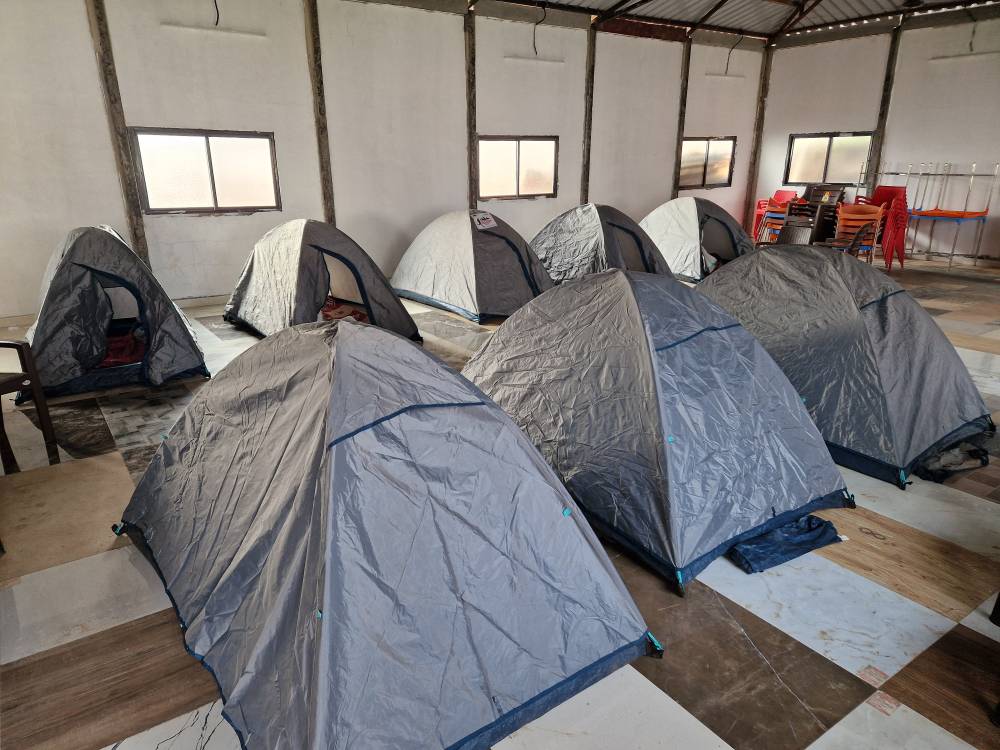
As is often the case in India, registration is via Townscript. It costs around 30 euros, with a running t-shirt, a great medal and other goodies included in the package. A month beforehand, I received a detailed email with all the information. On request, I also received a personal hotel recommendation, which is helpful – especially with a large suitcase and no fixed base in India – simply for the sake of logistics and having a shower after the race. It’s also really good value for money. Later, I received further information stating that you can also stay overnight in tents set up in a sports hall for half the price, with meals included. If you’re based locally and have a sleeping bag and mat with you, that is certainly a great option to find accommodation near the start.
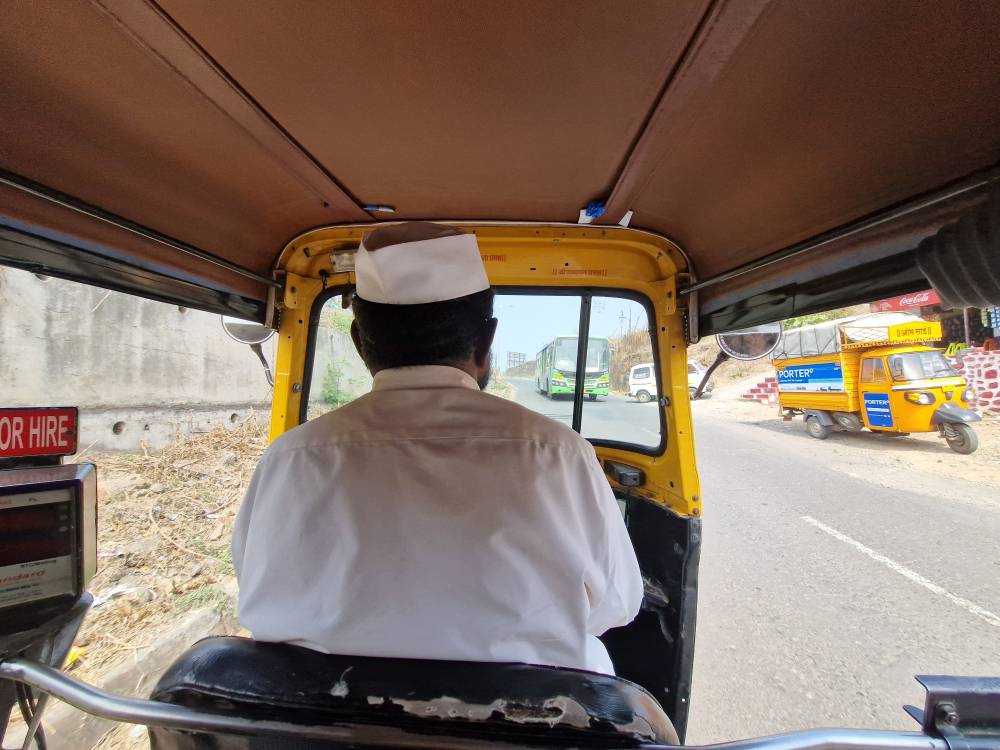
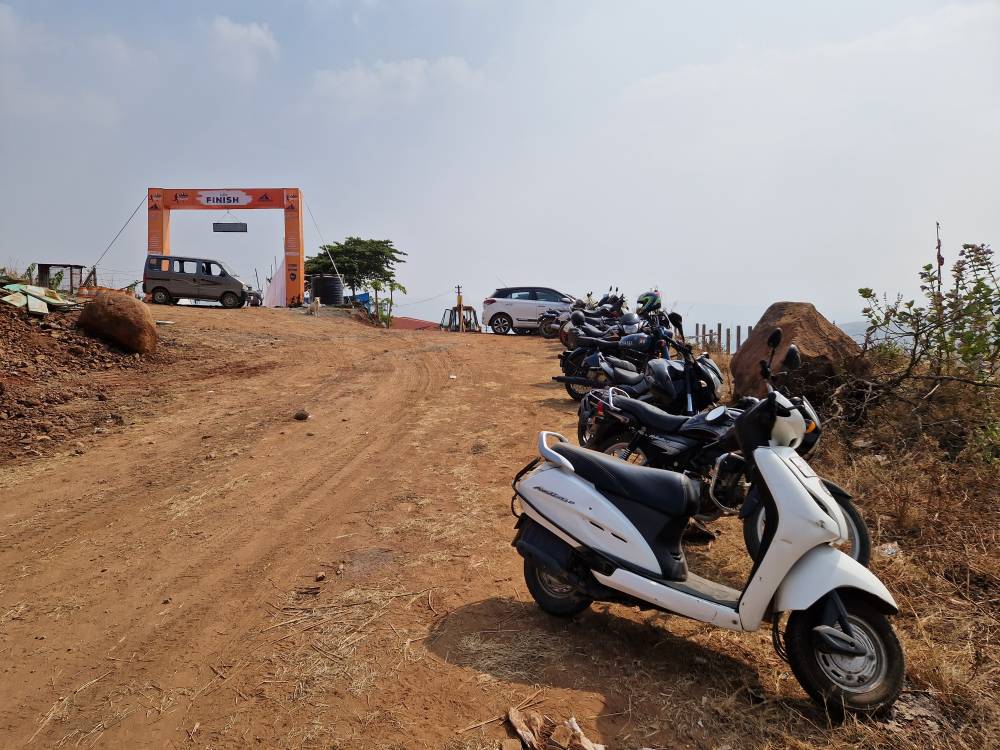
On Saturday, whilst the 100 km race is already underway (cut-off time 28 hours, winner just under 18 hours), I visit the start area and collect my race pack straight away, so that I can arrive a little later on Sunday. Getting there isn’t that easy, as the tuk-tuks only go as far as the end of the main road, since they can’t make it up the final kilometre of mountain track. A chat with one of the organisers, Adinath, gives me some interesting background information: although the race is only 25 km from the city centre of Pune, a city with over 4 million inhabitants, there were actually only 90 participants last year, of whom only half made it to the finish. By far the most DNFs were on the shortest 25 km course. Adinath and his business partner Jaygovind are runners themselves and founded a small company, Indian Sports Revolution, 13 years ago to train a team of 20 ambitious trail runners. Due to a lack of local competitions, they organised the race in Burj and, in June, the even more challenging ‘Mawla Ghaati Ultra’, which also features a 100-mile race. The main hurdle so far has been financing the timing equipment, which only pays for itself if there are a large enough number of participants. Whilst city runs are now very common in India and are popular amongst young people as an opportunity for ‘self-promotion’ via social media, trail running is not yet popular, as it attracts less media attention and is also much more strenuous and requires more expensive kit. The high number of DNFs last year was down to the fact that many half-marathon runners believed a 25 km trail run was the next small step, even though it takes more than twice as long and is more than twice as strenuous. That’s why the 10 km race was included in the programme this year, to give beginners a chance too. It worked – there were almost 400 entries. Unlike in Europe, where many trail runs now only offer a wooden medal and no longer provide running shirts – as most participants already have plenty of both at home – in India it is important to include great shirts and elaborately crafted medals in the race pack to boost the appeal for new participants (which was, after all, the reason for the cheating episode at the Mexico City Marathon last year). In addition, the races have been linked to ITRA and UTMB to raise their international profile.
Incidentally, the name ‘Jumping Gorilla’ stands for activity and a fresh start on the one hand, and for perseverance on the other, as gorillas are known for their particularly strong and enduring grip. It fits perfectly!
The ride sets off on Sunday at 7 am, just before sunrise. Contrary to what the hotel manager had predicted, there are unfortunately no tuk-tuks at the usual meeting point at 6 am. There’s hardly anyone on the road at all and, of course, it’s still dark. Fortunately, there are four young couples waiting there with their motorbikes, and I ask them for advice. After a three-minute discussion about the destination and route, one of the girls joins another couple and I’m offered a free seat, which I’m only too happy to accept. It’s a spectacular ride as a passenger along the village roads – one I won’t forget in a hurry. It’s only 10 minutes, but the helpfulness of the Indian youths is truly overwhelming. Whilst I hop into a car full of runners at the drop-off point within seconds (it’s true!), who give me a lift the last kilometre up the hill, the young people drive on behind to take a closer look at the whole event. Perhaps they’ll take up trail running one day too. Getting up early doesn’t seem to be a problem for them.
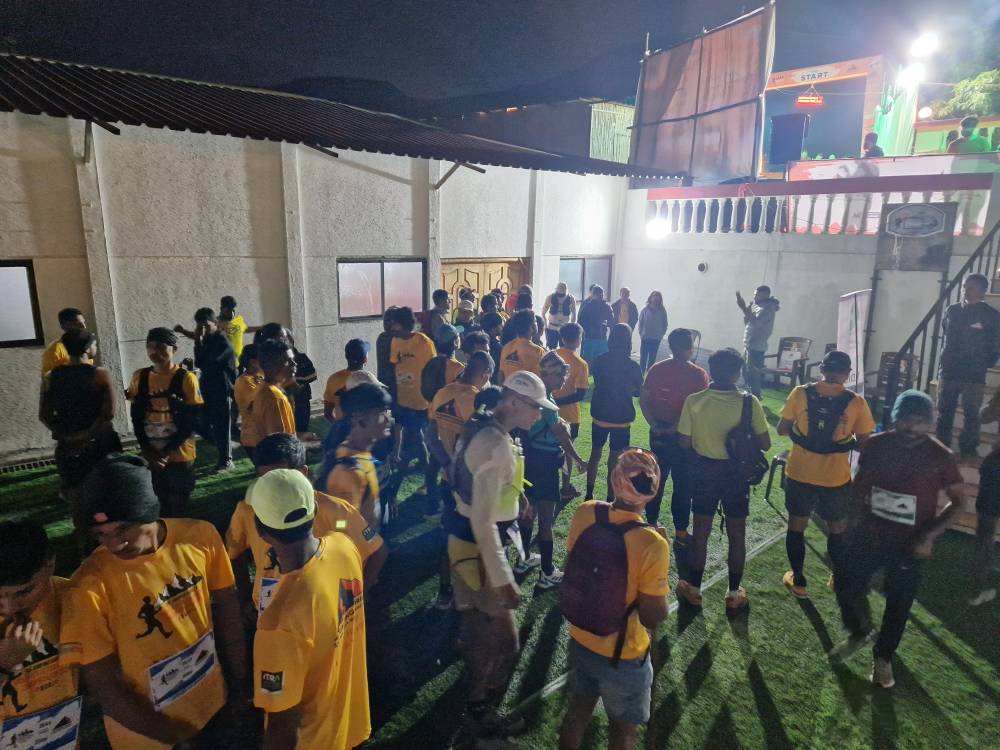
The brief technical instructions at the start are given exclusively in the local Marathi, but with enough English words sprinkled in so that you know what’s going on. Thanks to the helpful preparatory emails, it’s basically self-explanatory.
Before the start, I get to know the race’s sponsor, Ravindra Saraf from InfraBeat, a local IT company that is set to expand into Europe soon. He has many years’ professional experience in Germany and Scandinavia and is a trail runner himself, so promoting the sport in India is a cause close to his heart. To this end, he supports athletes and events, and would very much like to bring the UTMB – whose World Series is already held in other parts of Asia – to India. Unfortunately, this would require additional government support for the race. However, the government is currently focusing on Olympic sports. If it does happen in the coming years, it’s sure to be spectacular!
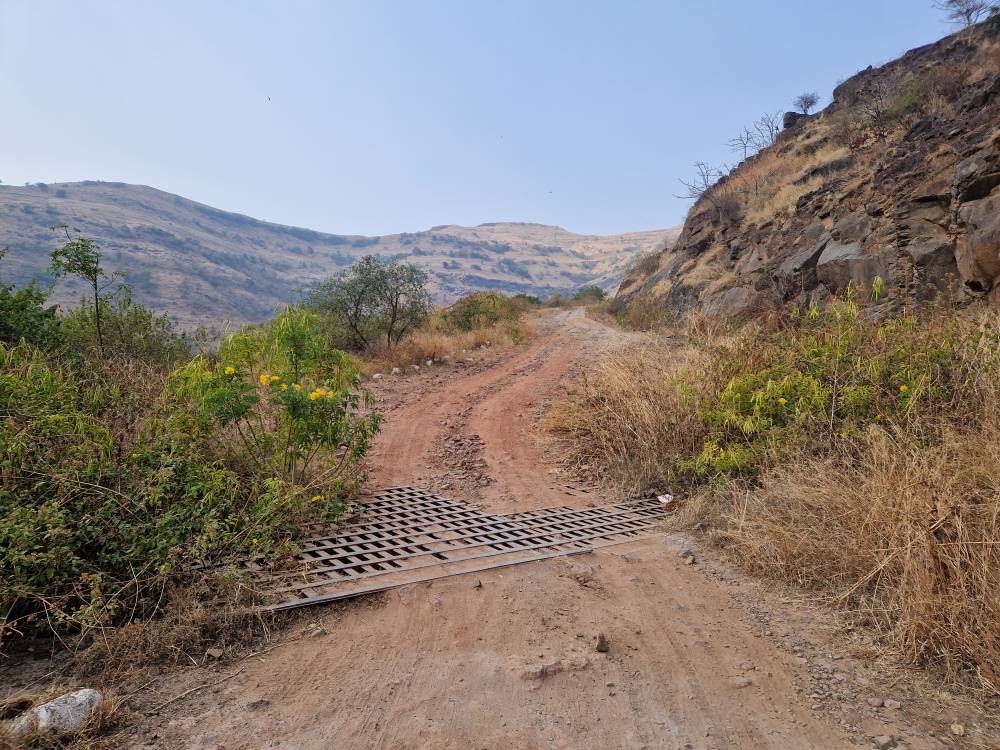
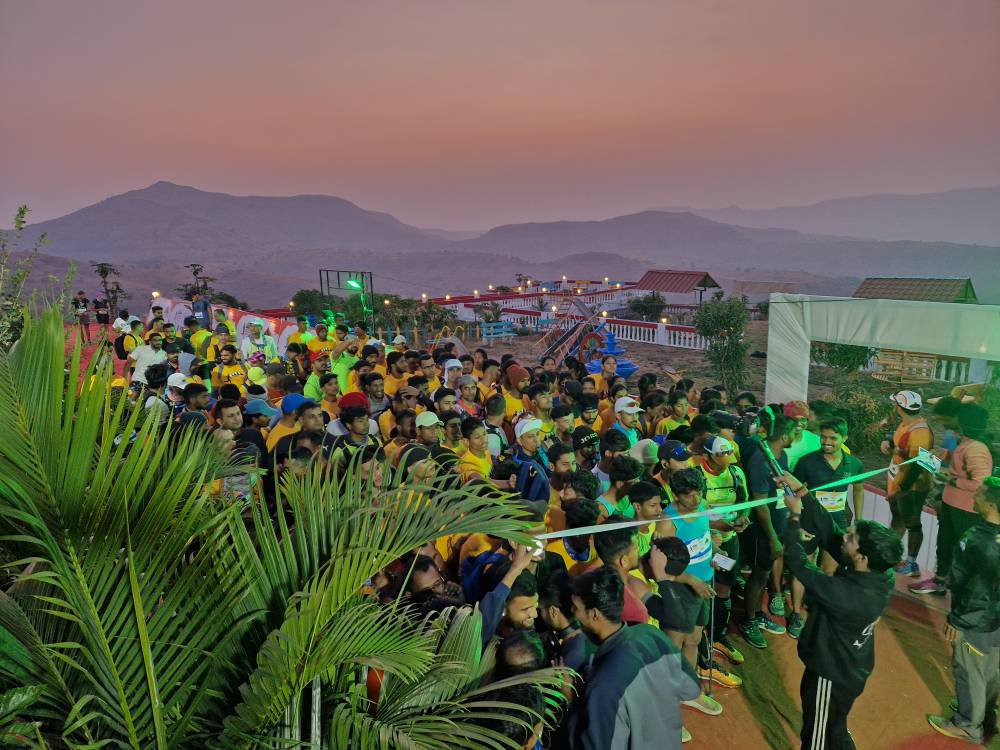
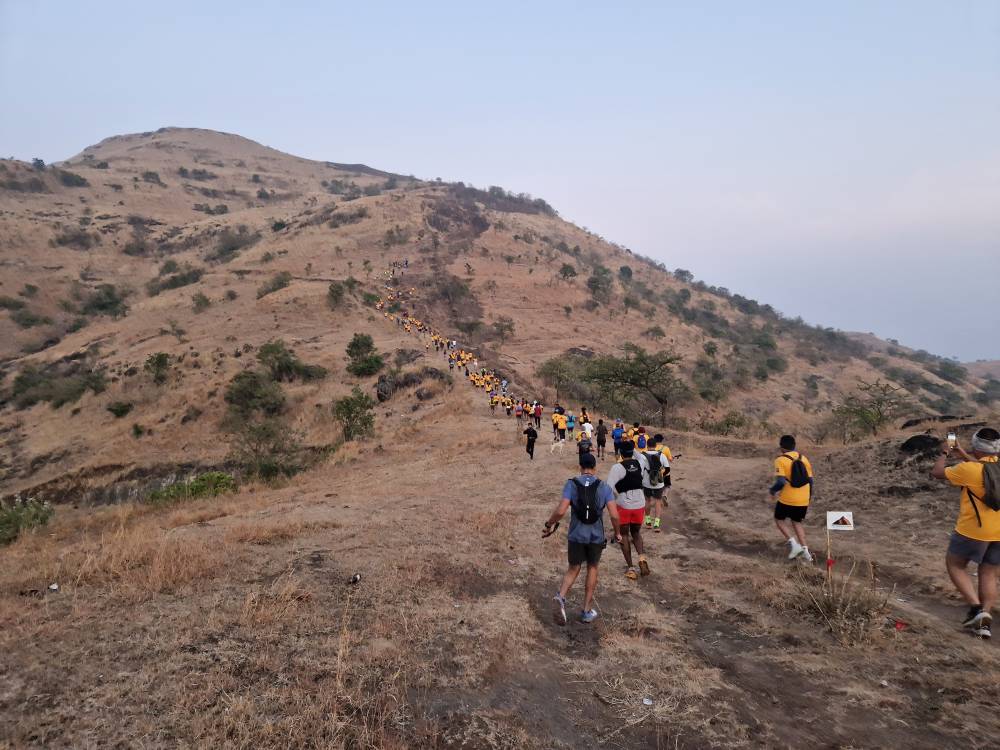
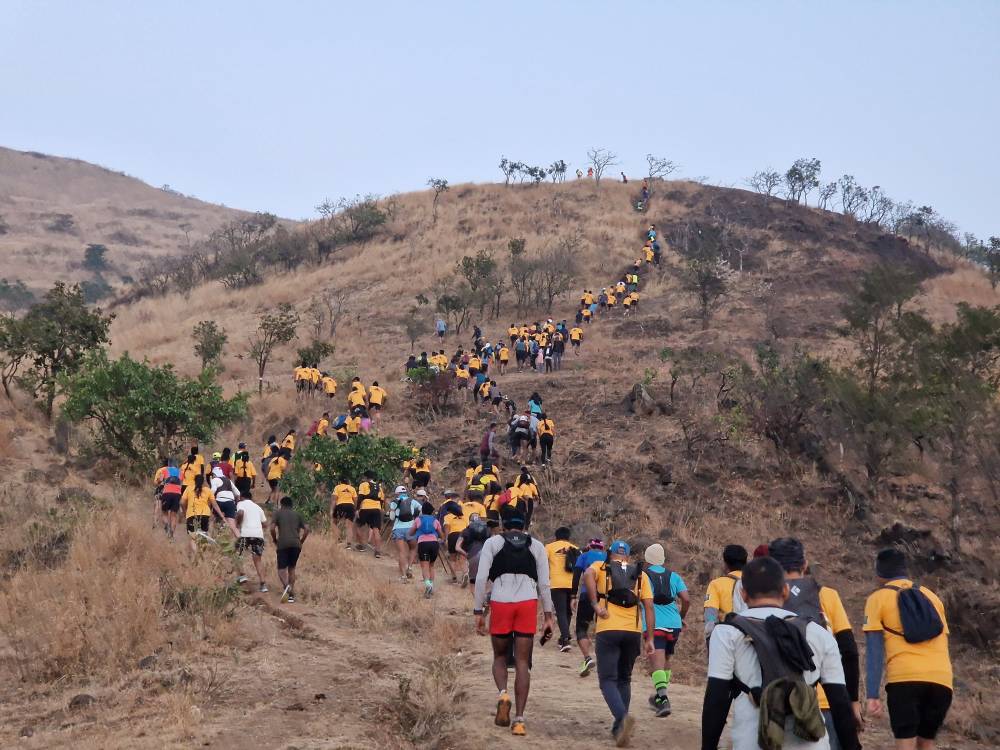
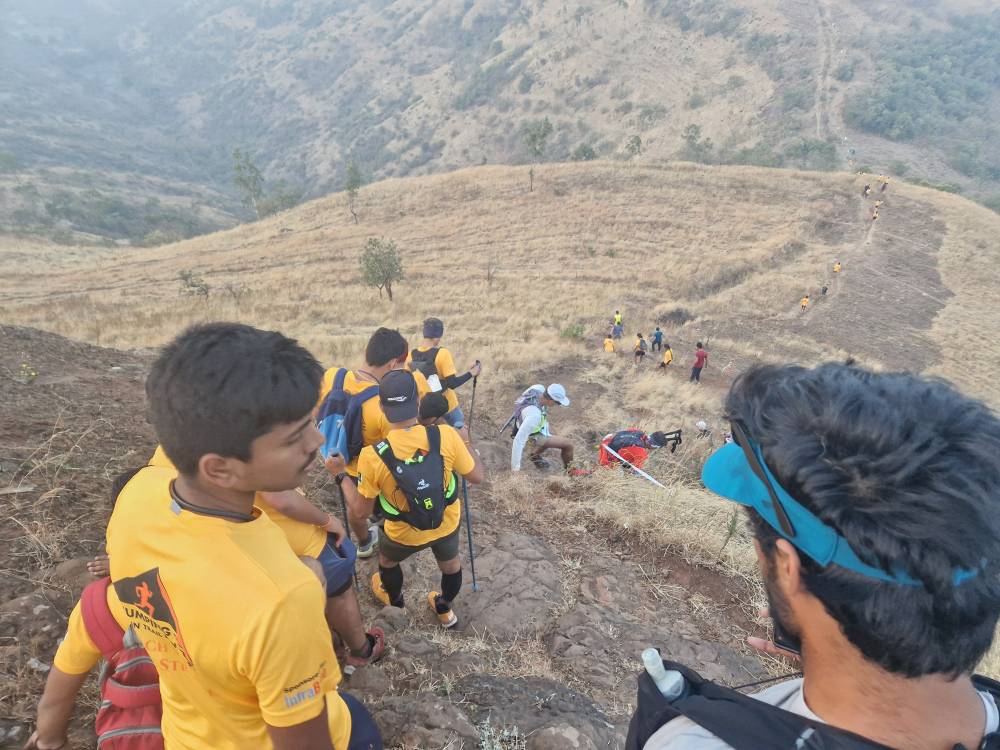
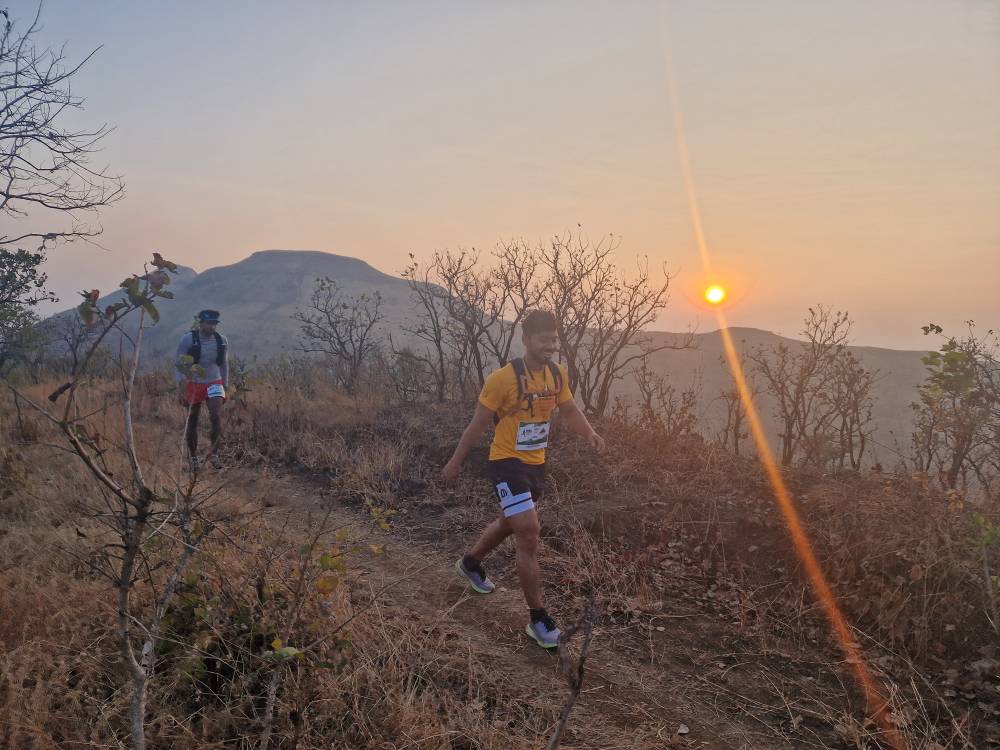
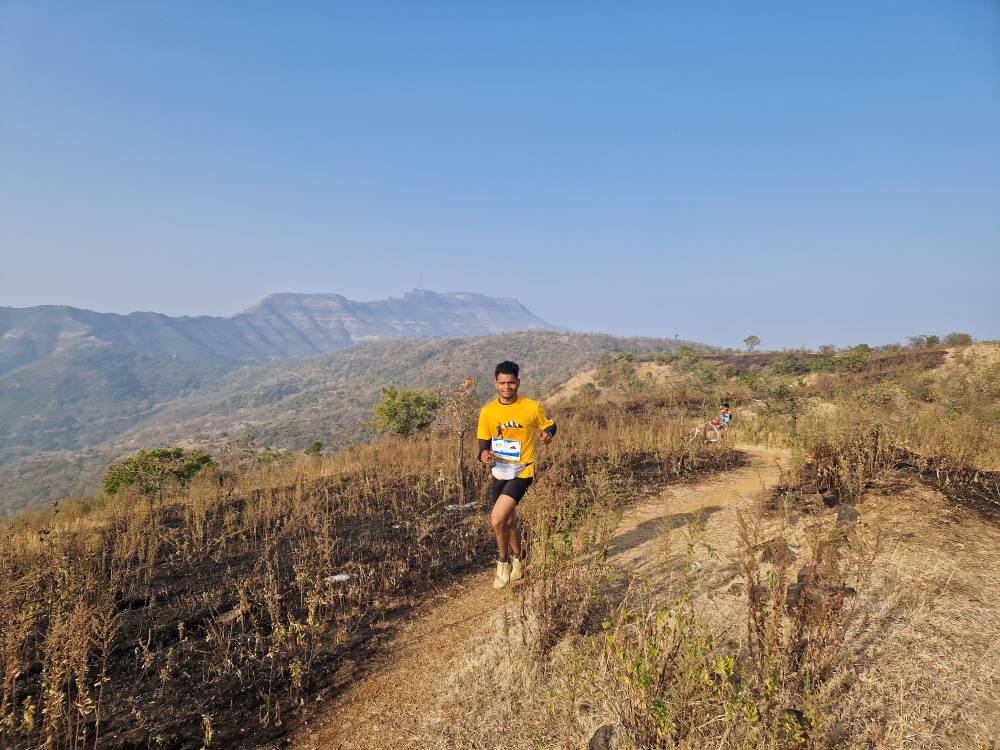
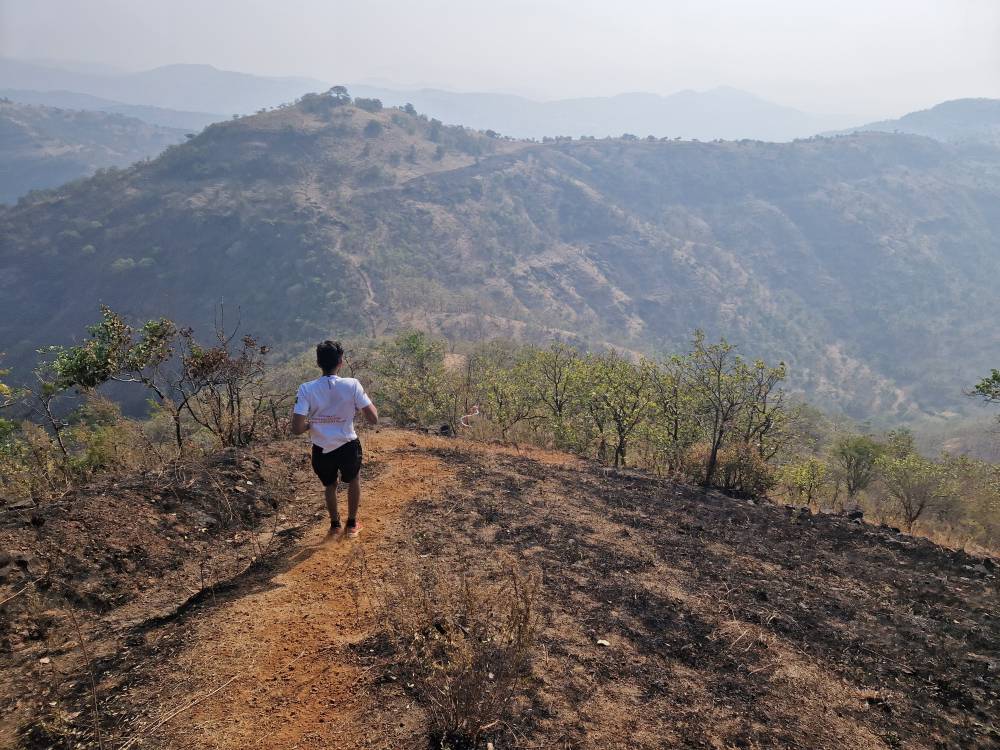
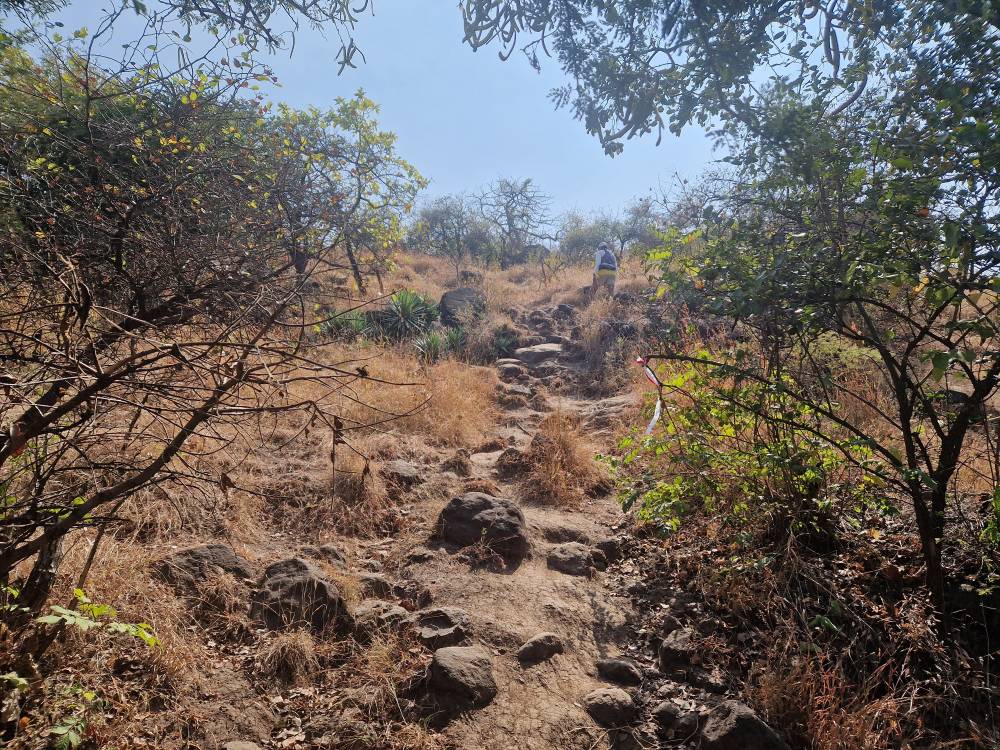
The race starts on time whilst it is still dark, but the sun rises just a few minutes later. The route follows the Katraj-Sinhagad hiking trail, which is very well known locally. Despite its popularity, this is a genuine nature trail; in other words, the path is unpaved throughout and is often only wide enough for one person at a time. This results in a long queue right at the start, but – as most participants are wearing the current orange Jumping Gorilla t-shirt – it looks lovely in the early morning light and disperses after just two climbs. Most participants are running the short 10 km route and are wearing normal running shoes and carrying neither poles nor water. However, many do have their mobile phones with them, some even playing loud music, which is a bit jarring in the peaceful natural surroundings but still okay. This seems to work well for the mostly young participants, and whilst I have always used up my litre of water on the 8 km between the refreshment stations, they apparently manage just fine without it and are also much faster than me. Incidentally, the youngest participant is 13. When I tell him that, age-wise, I could be his grandad, his eyes widen, but he confirms it with a smile. He probably can’t imagine his grandad making such a fool of himself, panting heavily and sweating profusely on a Sunday whilst being overtaken by one teenager after another.
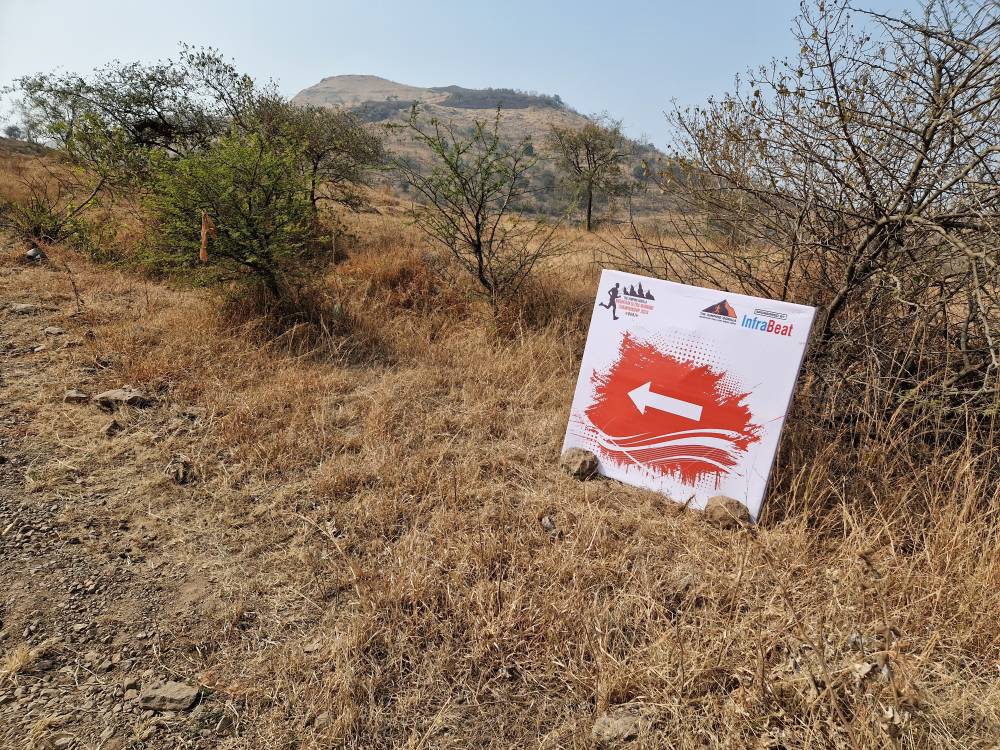
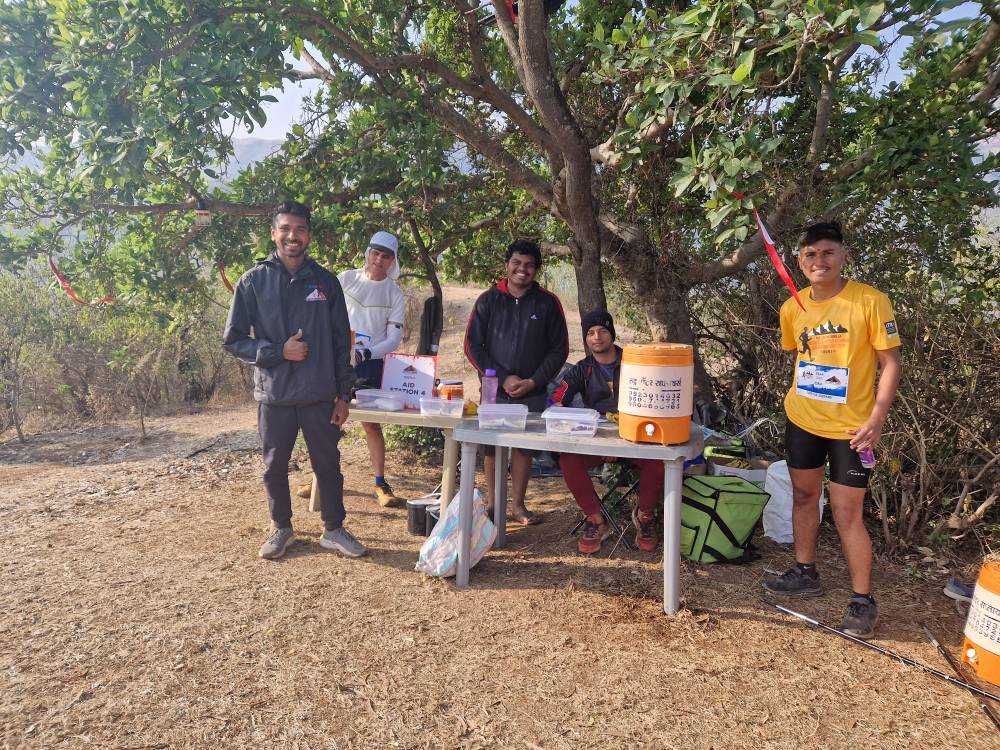
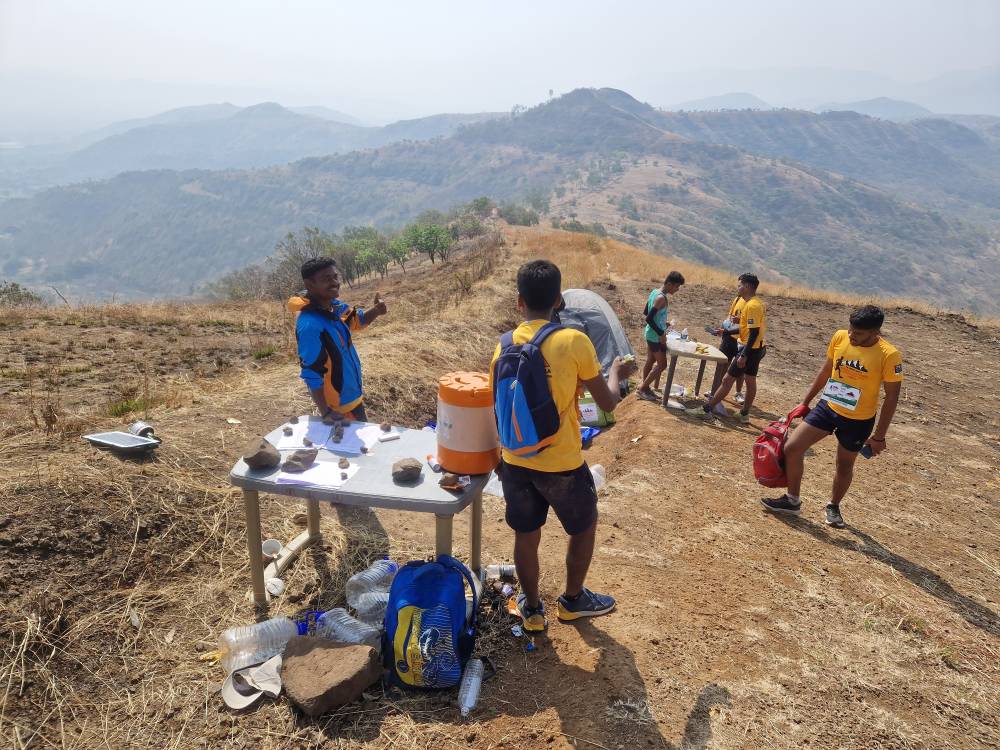
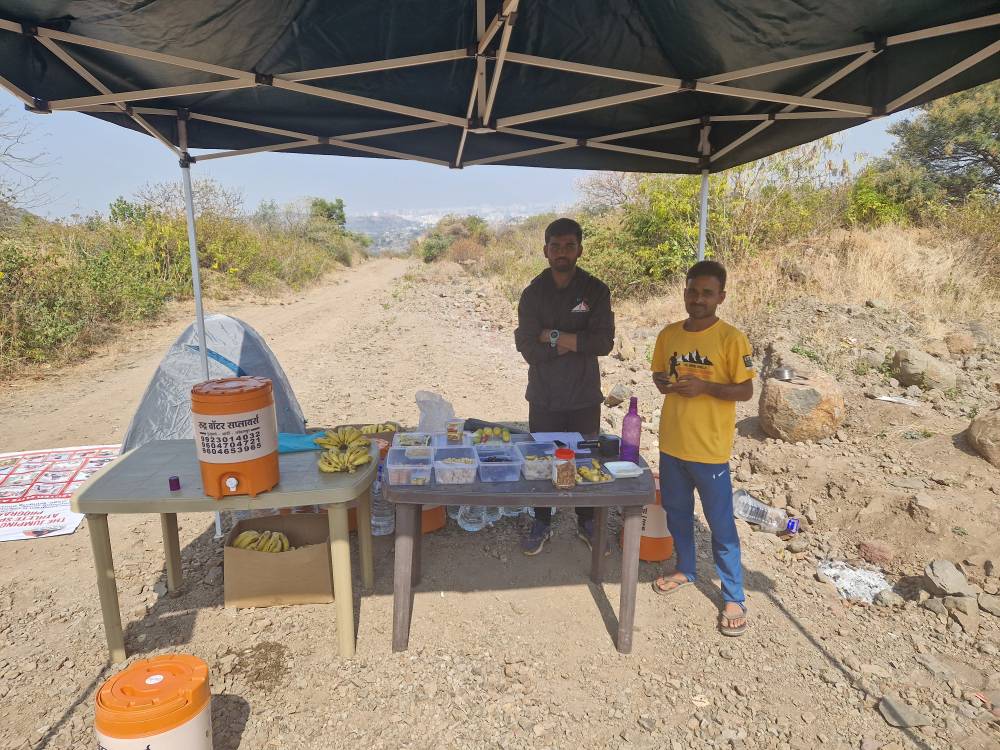
The trail is excellently marked, and there’s a refreshment station at each of the three critical points. There are bananas, nuts, dried fruit, salt and, above all, water. No unhealthy or processed foods, no ‘sports nutrition’ and no Coke or the like. The people are extremely friendly. They scan your race number and always ask very intently, almost anxiously, whether everything is still all right.
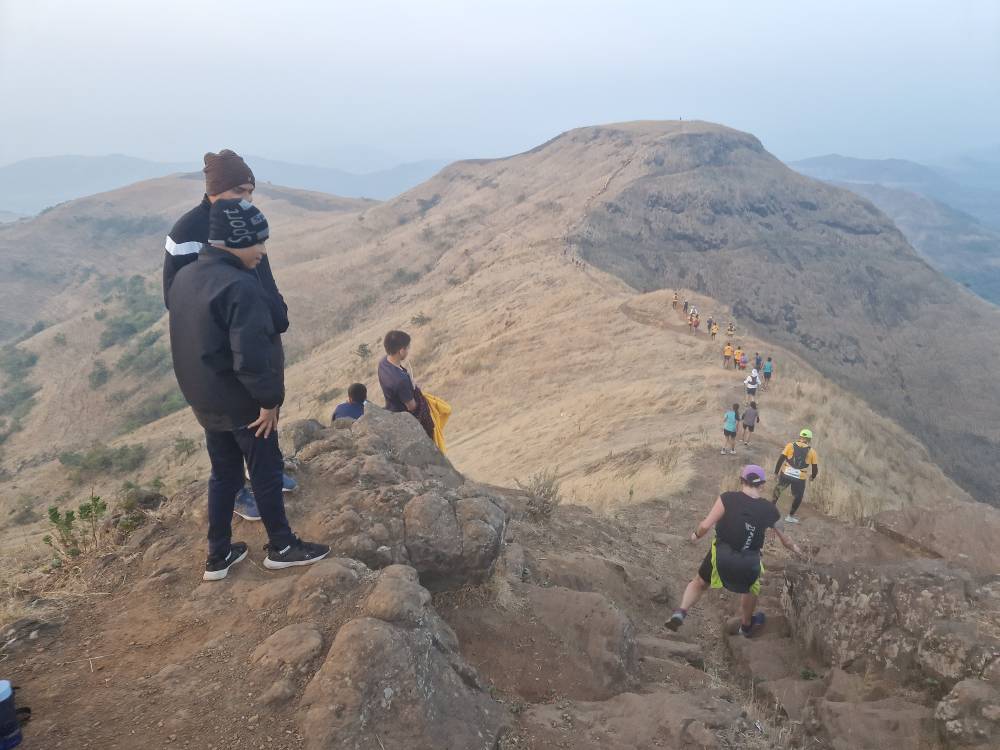
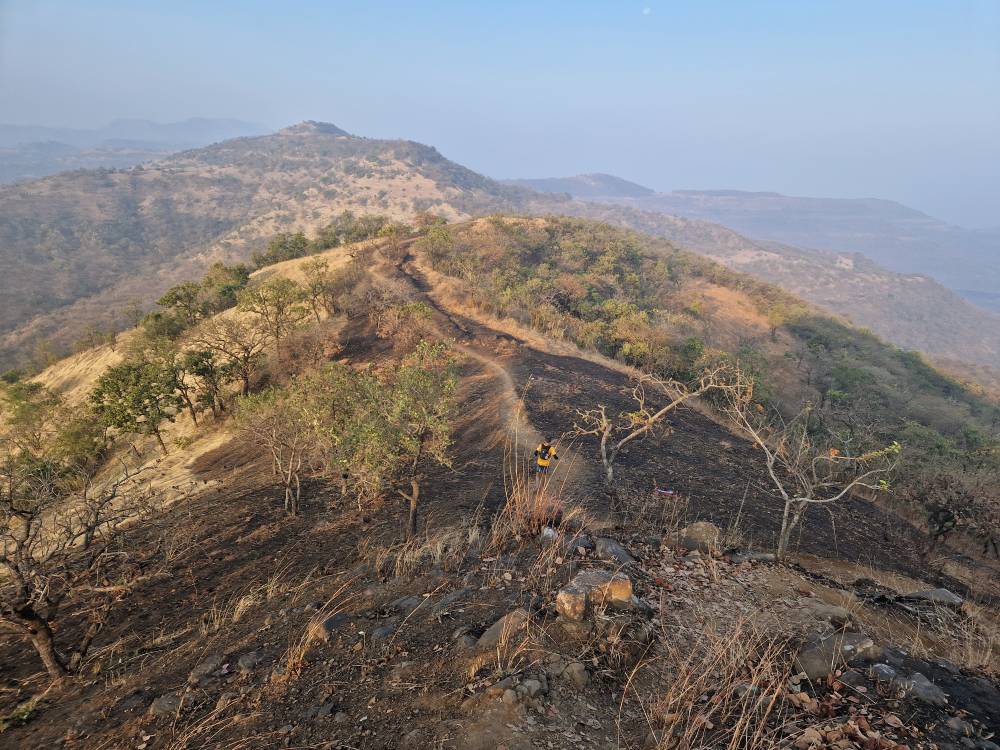
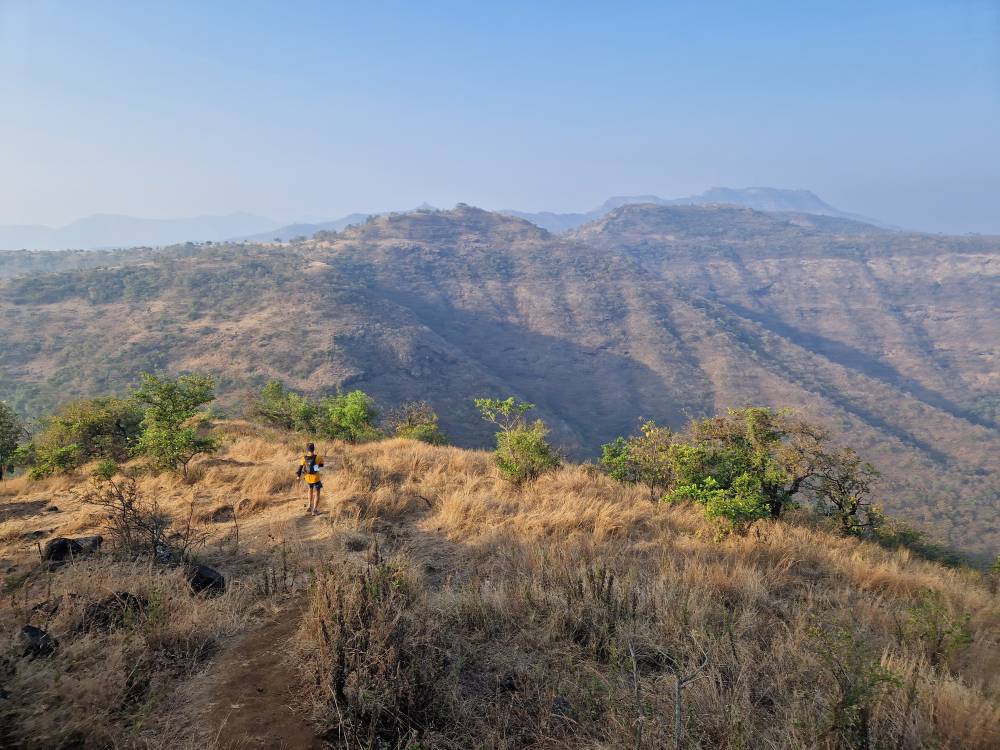
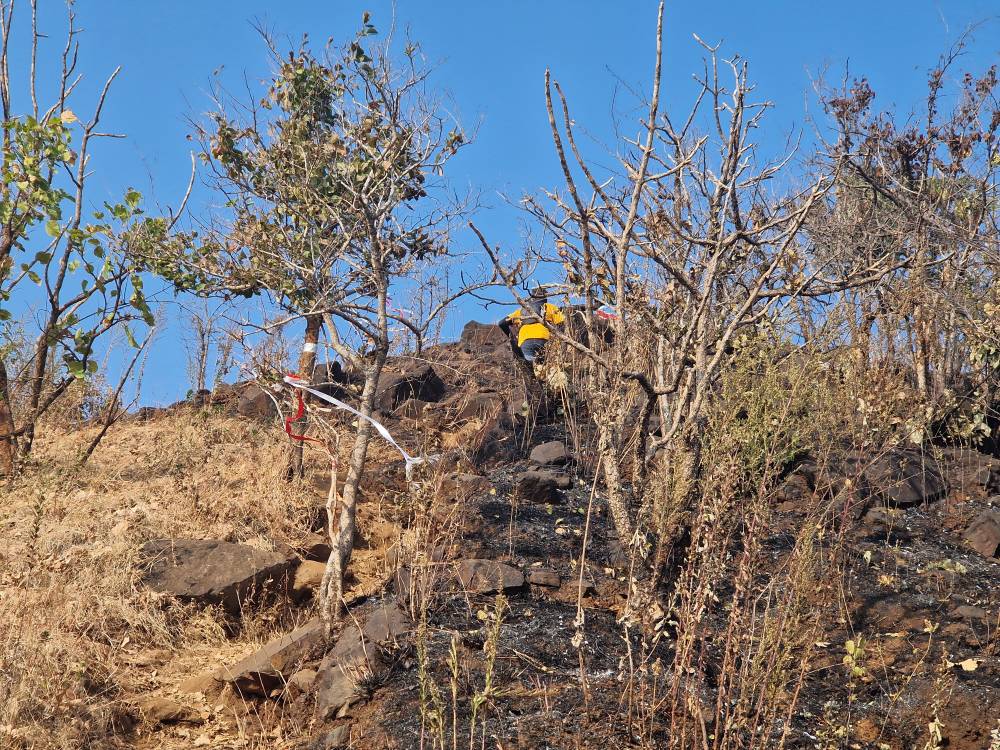
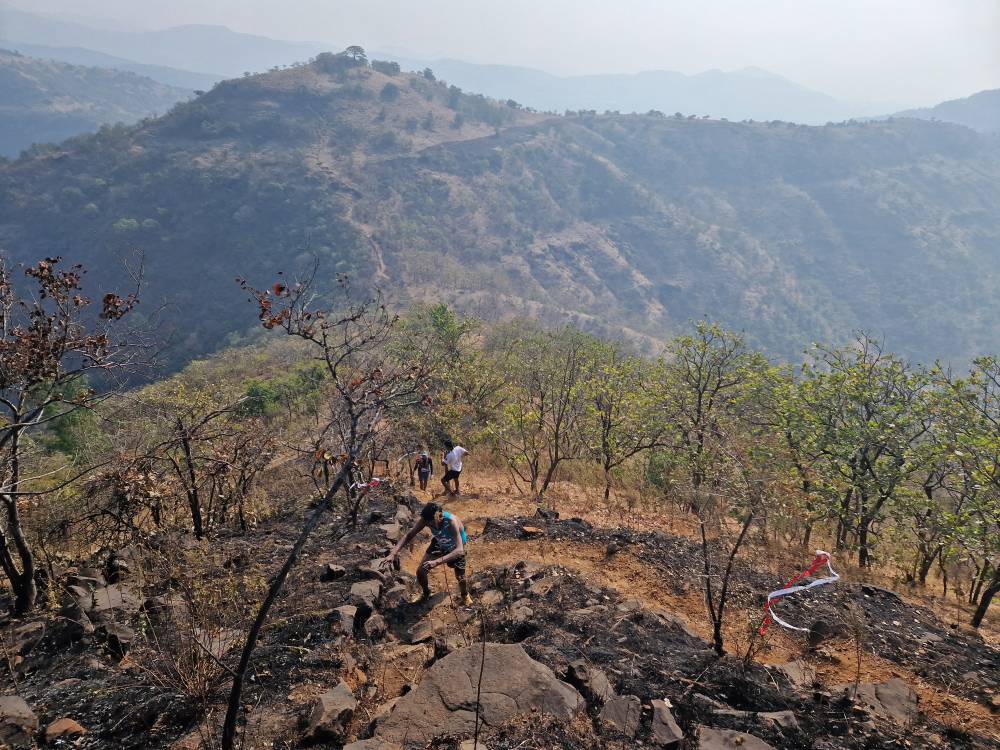
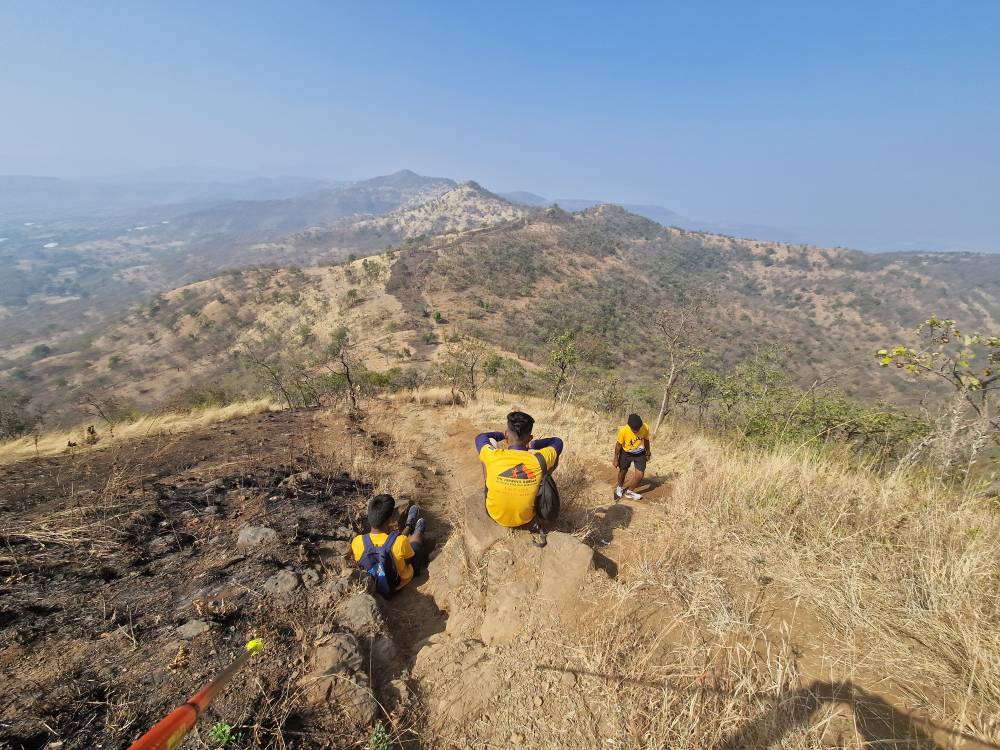
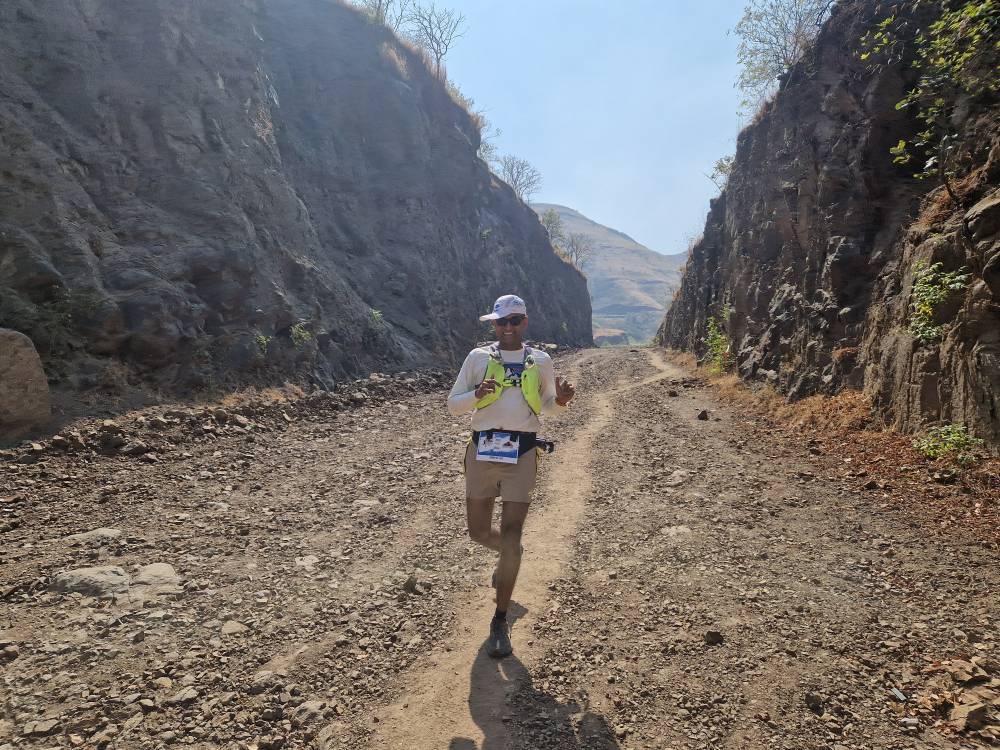
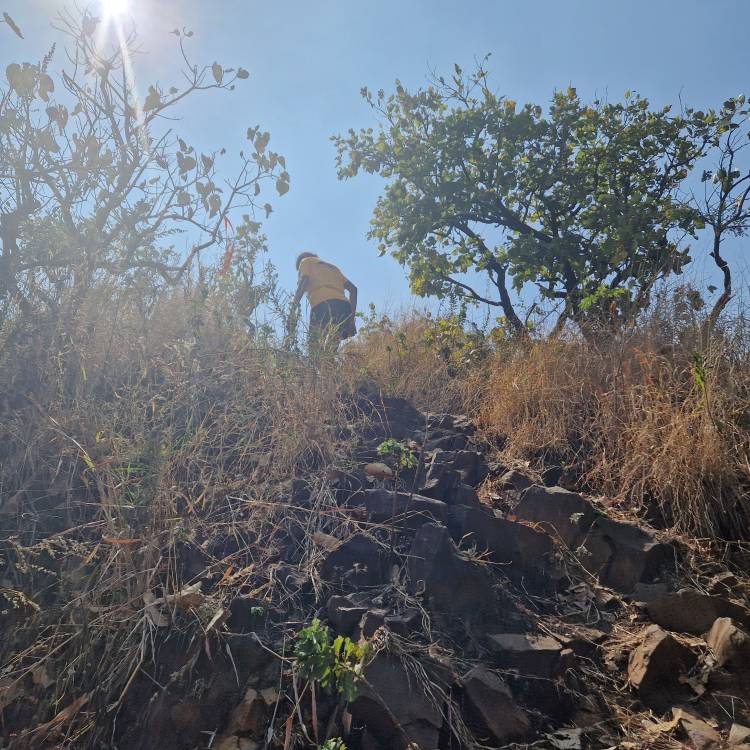
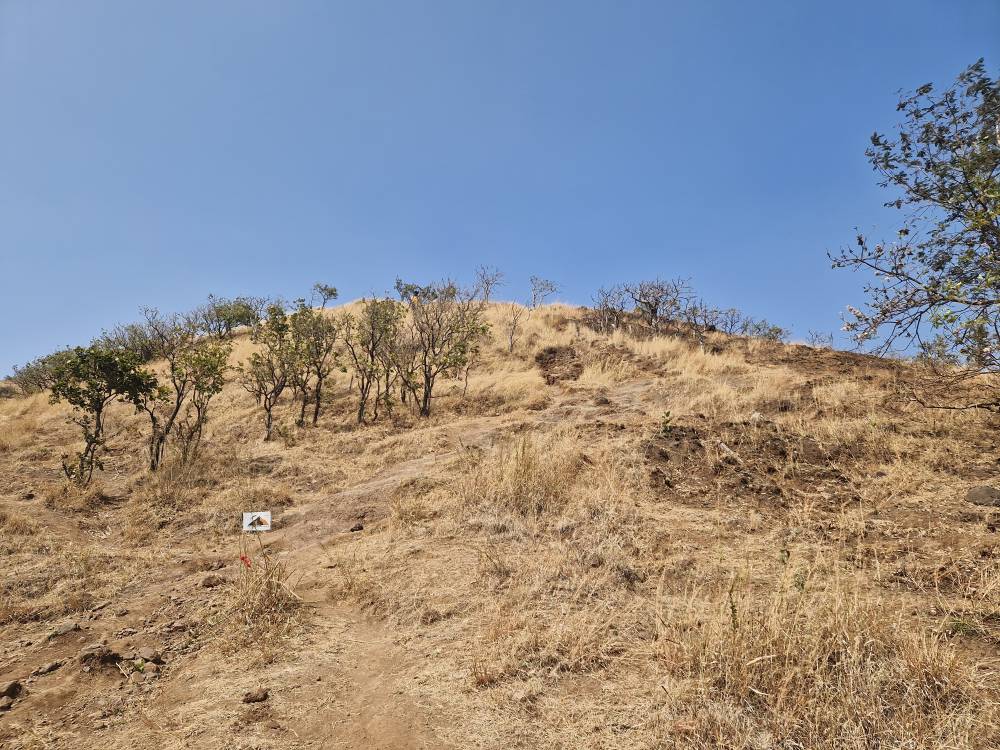
The route itself crosses several mountain ridges, but also takes in every hill along those ridges, which really adds up in terms of elevation gain. And the climbs are steep – in places there are rocks you have to scramble up, or slopes that some people deliberately slide down on their backsides for a few metres. You can keep your balance quite well with poles, but it’s simply exhausting, as there are dozens of such steep ascents and descents. In some trail runs, the climbs where you walk rather than run are actually the most relaxing part. Not here. It’s challenging from start to finish, and you have to be careful right to the end to lift your feet high enough so as not to trip. A few runners do, in fact, arrive at the finish line with bandages. The support at the aid stations is excellent.
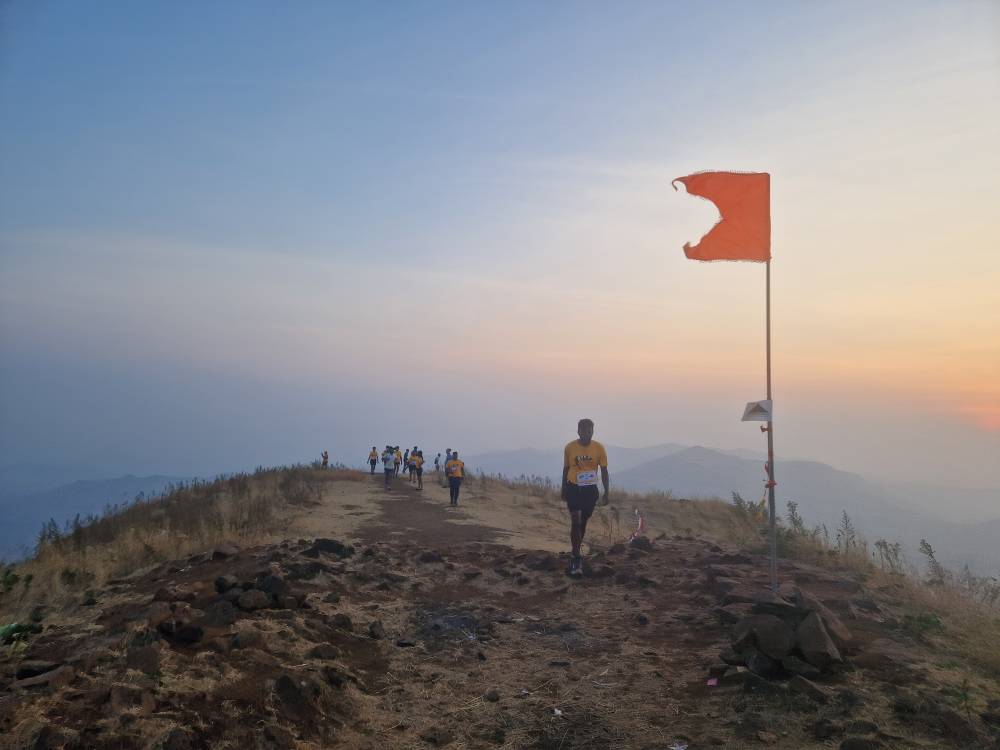
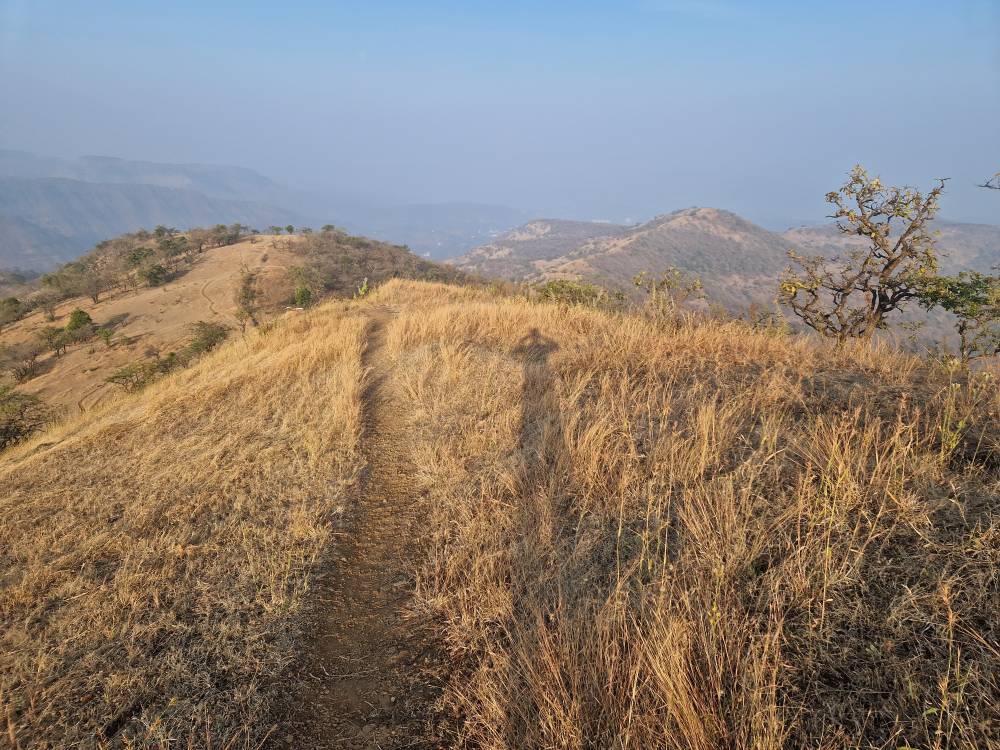
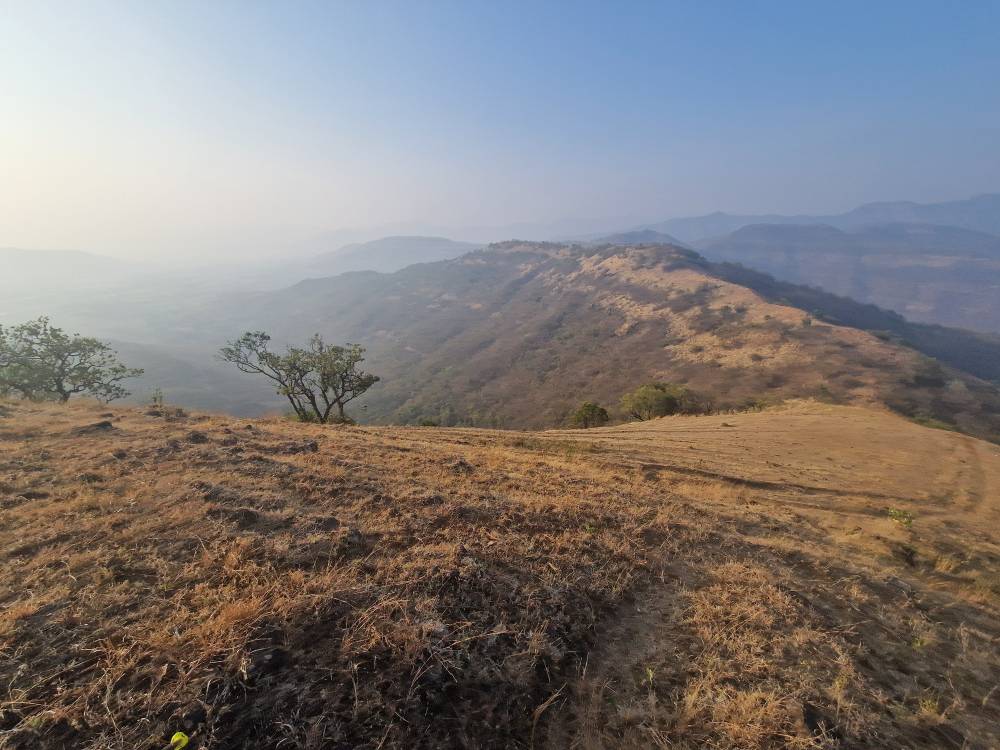
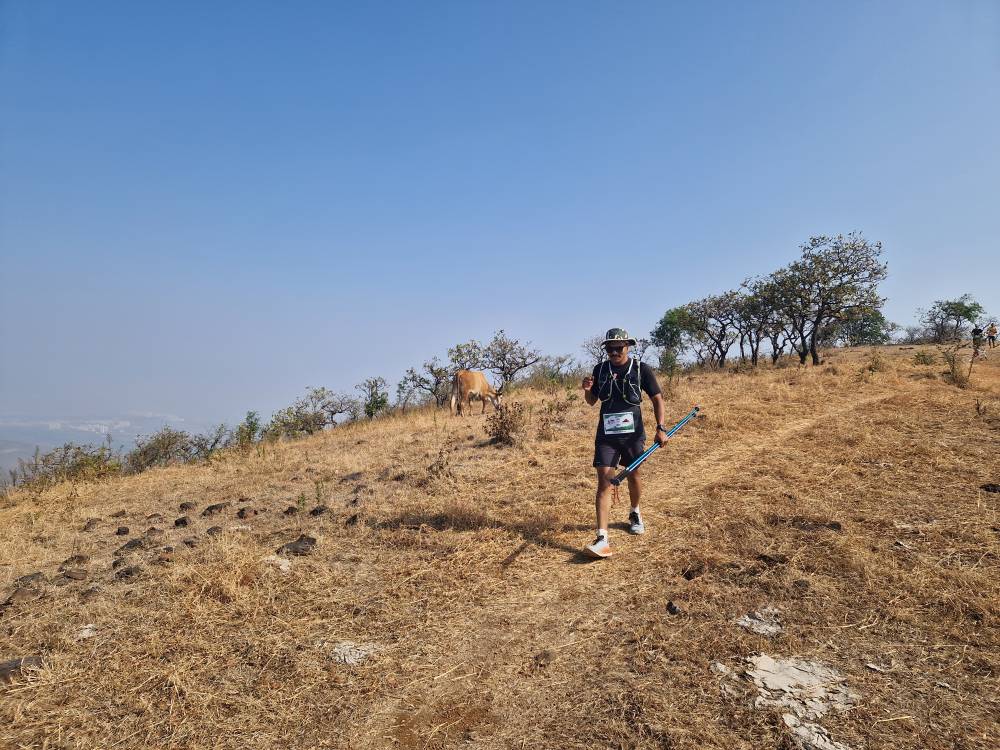
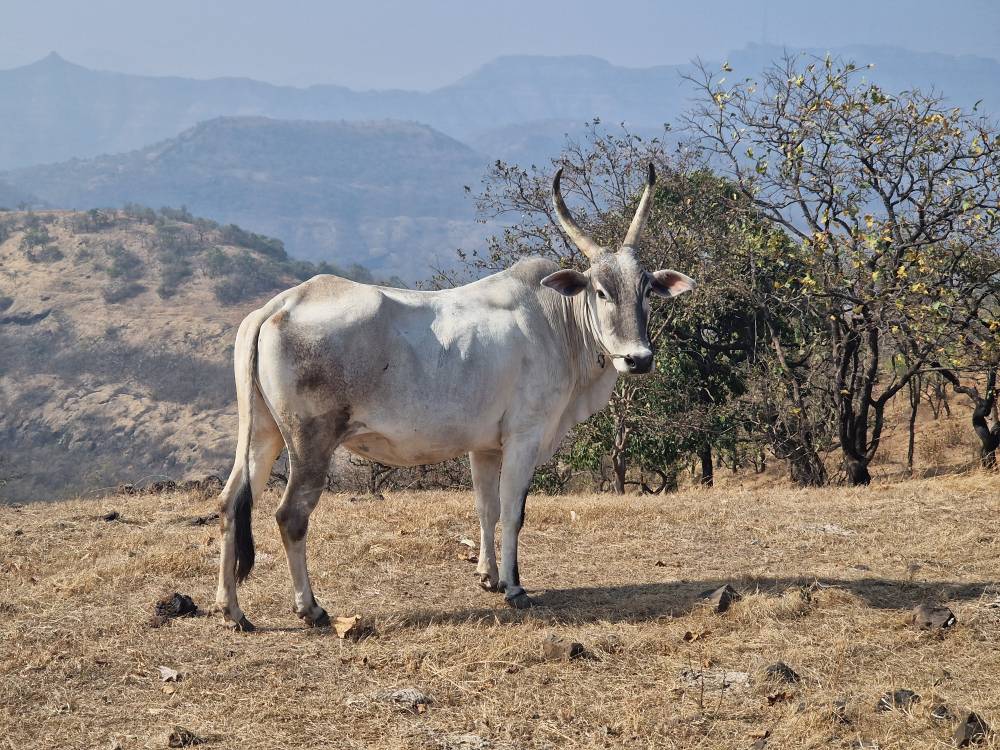
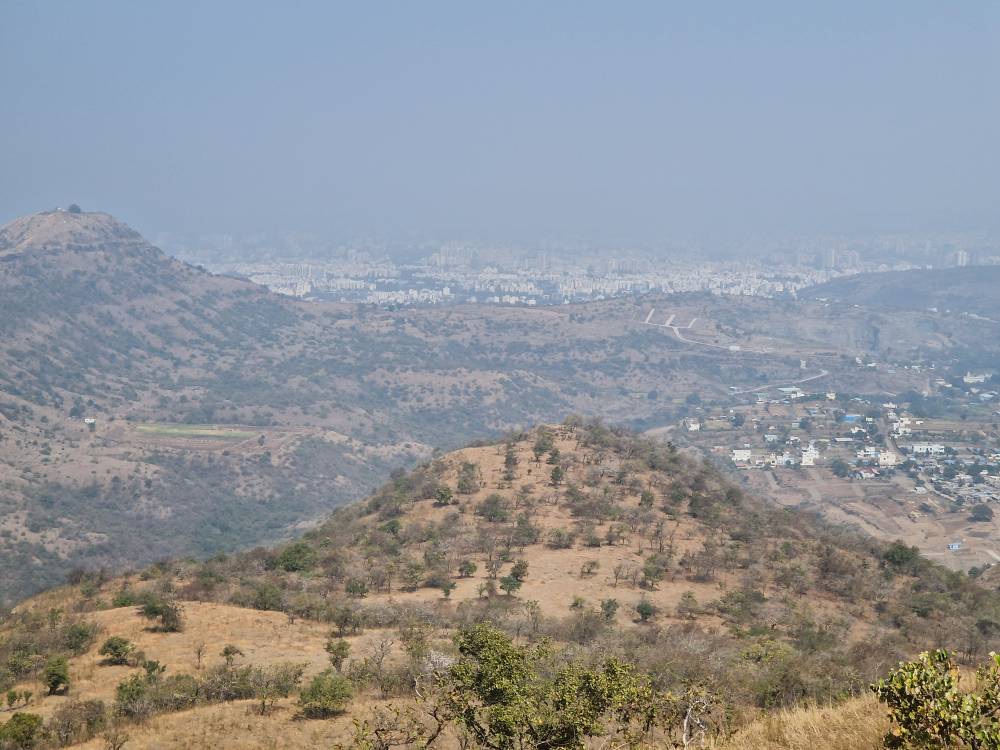
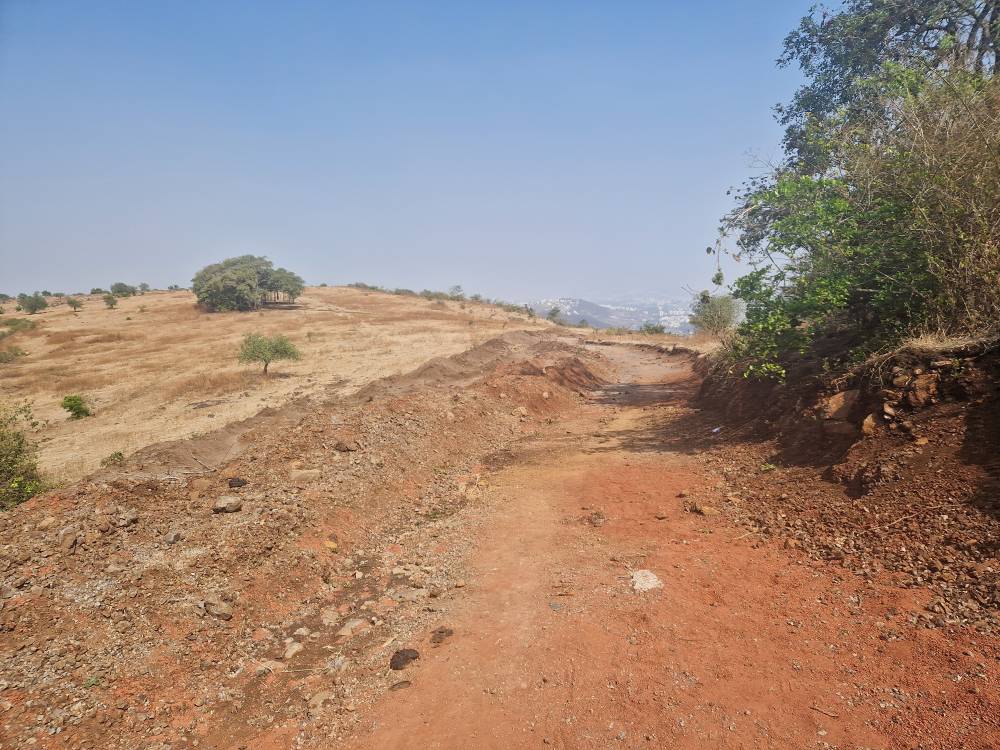
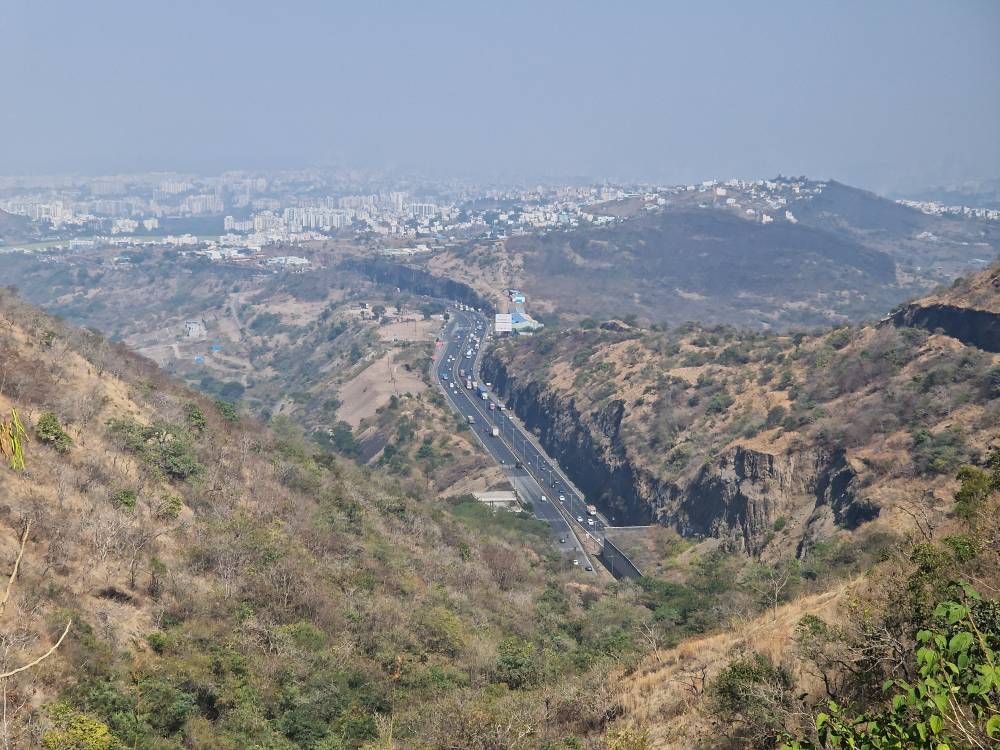
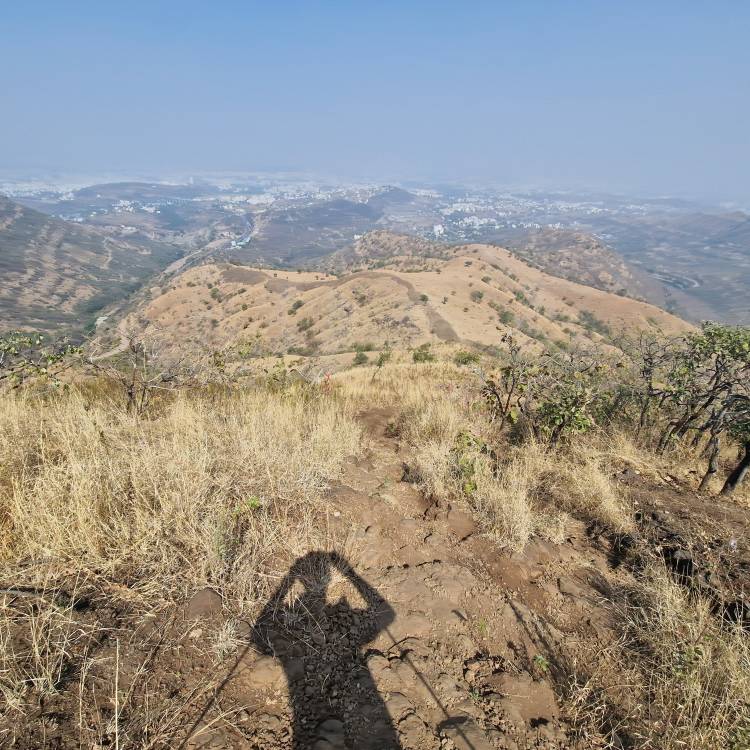
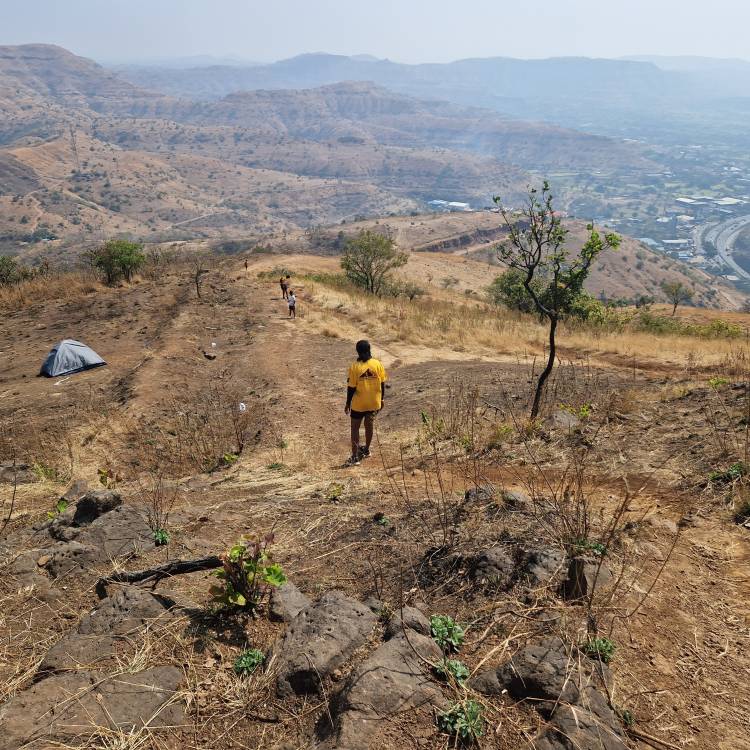
The landscape has a very Mediterranean feel to it – grass, a few bushes and some small trees. Birds, lizards, a couple of beetles. And cows, of course, but that goes without saying in India. The view isn’t great in the morning due to the fog or smog in the city, but it clears up as the day goes on, giving you a lovely view of the city of Pune and the motorway that passes through a tunnel under the mountain range. Above all, the view tells you that, unlike Pune’s 4 million inhabitants, you have the privilege of being in exactly the right place, with the best scenery, the best air and the best sunshine. The latter, however, does become rather unpleasant as the hours go by. I’d always assumed that running in 30 °C wouldn’t bother me too much, but I think I was wrong. It’s simply very exhausting, even though the humidity isn’t too high, and by the end I have a dried crust of salt under my vest, the likes of which I’ve never seen on my clothes before in my life.
After 4 km, the 10 km runners turn off, so that you suddenly find yourself quite a distance behind the runner in front. However, the fast runners then come towards you after the turning point (at 12.5 km), and the runners on the 50 km route – who have just completed the other branch – join you later on as well, so you keep bumping into people every now and then, which really gives you a boost.
Things get interesting again over the last 5 km. First, you follow a road that is open to traffic. Whilst the surface could certainly be classified as a trail, it’s a pleasantly steady downhill run. Then, however, the bliss suddenly comes to an end: a turning point followed by the steepest and longest climb over 2 km, before you then climb or run downhill again for the final kilometre towards the finish line. A truly gruelling finish. Although I’m not feeling too physically knackered and haven’t got any aches or pains, I’m still certain I wouldn’t have managed the 50 km today – and that I’ve still got a fair bit of work to do before my next proper ultra. Oh, and sun cream would have been a good idea; it’s easy to forget that when you’re getting ready for a run whilst it’s still dark.
At the finish line, there’s a medal and refreshments. In the hall with the tents, wide foam mats have been rolled out so you can stretch and lie down to rest. I get the VIP treatment, and Jaygovind himself takes 15 minutes to stretch and loosen up my body in every direction. Compared to that, my own minimalist stretching routine after a run is really nothing at all. He stretches muscles I wouldn’t even have noticed whilst running, but this gives me the confidence that tomorrow, when I have to go back to work, it’ll be a great day physically.
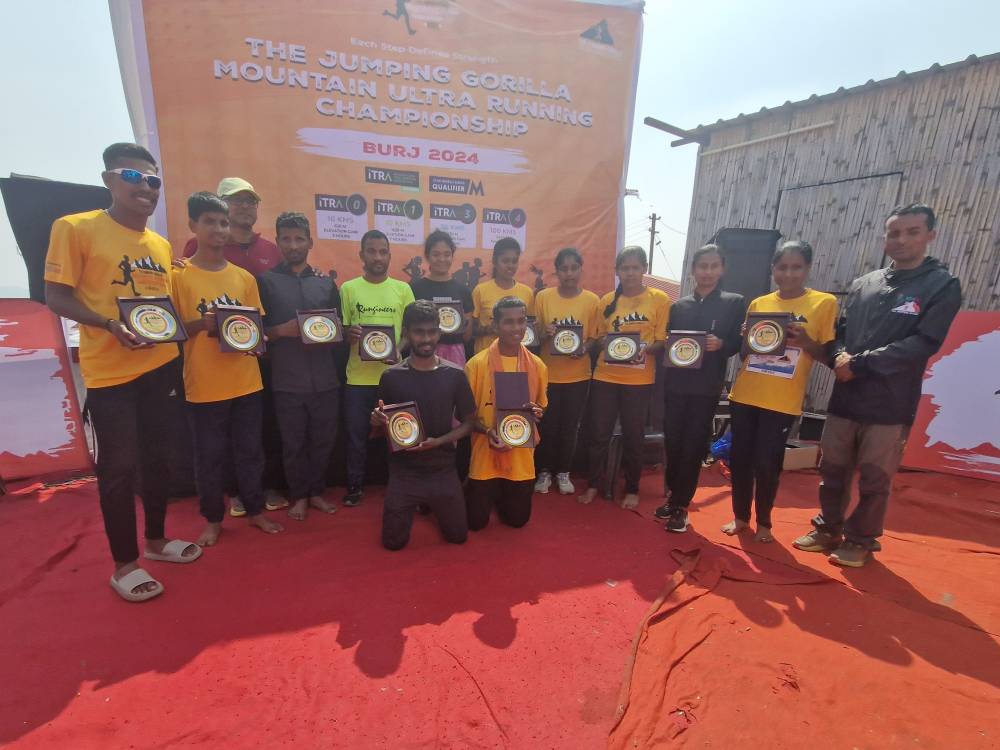
The prize-giving ceremony follows shortly after I cross the finish line. Interestingly, the categories aren’t ‘Men’ and ‘Women’, but ‘Men’ and ‘Girls’. They are indeed all very young. The oldest local participant is two years younger than me and ran the 10 km, but his whole family seems to have been at the start and he clearly enjoyed it. We take a photo together straight away and swap contact details. Interestingly, some of the young winners then come up to me – having presumably heard that I’m a ‘foreigner’ – and take photos or videos with me. It feels a bit strange, but actually quite nice, as the young people are genuinely interested and very respectful. I’ll probably find myself on Instagram soon, as a short interview was also conducted for this purpose – filmed with the camera held vertically, as is customary these days. If it helps the further development of trail running in India, I’m always happy to oblige. The country has so much potential, both for its people (with 1.4 million inhabitants, India is the world’s most populous country – and at the same time almost twice as densely populated as Germany) and for visitors.
A fantastic event, for which special thanks go to the organisers Adinath and Jaygovind and the sponsor Ravindra. Their commitment to making trail running more popular in India and getting people out into nature is truly in valuable. For me, the chance to immerse myself so deeply in the local community and nature during a short trip abroad is a real gift!