Mumbai Marathon, 19.01.2025
This report is included here as, while the Mumbai Marathon is clearly not a trail run, many a trail runner will end up participating in this by far largest marathon in India at some point in their career. Please note that this report is written from the perspective of a foreign runner visiting India.
Something a bit different for a change. A big city. Fast-paced. Hot. But also varied enough to keep you well entertained for hours. With about 70,000 others participating in the different events. Incidentally, the winners of the marathon were Berhane Tesfay – someone I hadn’t heard of before – in 2:11:44, and Joyce Chepkemoi in 2:24:56.
Once again, I’m off to India on business, though this time, unfortunately, there’s no trail run nearby. But at least the Mumbai Marathon happens to take place on the Sunday morning before my first appointment in that very city, so I’ll be taking part somewhat reluctantly but not unhappily in my first road marathon since February 2020. Back then it was Seville in Spain – a wonderful place – just three weeks before one of the strictest lockdowns in Europe was imposed there due to the covid pandemic, bringing my ‘maybe-I’ll-set-another-personal-best-in-my-marathon-career’ to an end.
In the weeks leading up to the race, an information email arrives from the organisers almost every day, including a weather forecast with data from the last three years (which is actually always the same, ranging from 20 °C and 80 per cent humidity at the start to 30 °C and 50 per cent at the finish), but nothing about the air quality. Presumably because there’s nothing you can do about it anyway, and most locals are used to it. The local press is, however, already highlighting the issue and forecasting a PM 2.5 concentration of up to 154 along the running route, compared to the 15 that the WHO considers safe. So I resolve to run deliberately slowly, though I must also admit that I noticed the humidity that morning more clearly than the air pollution.
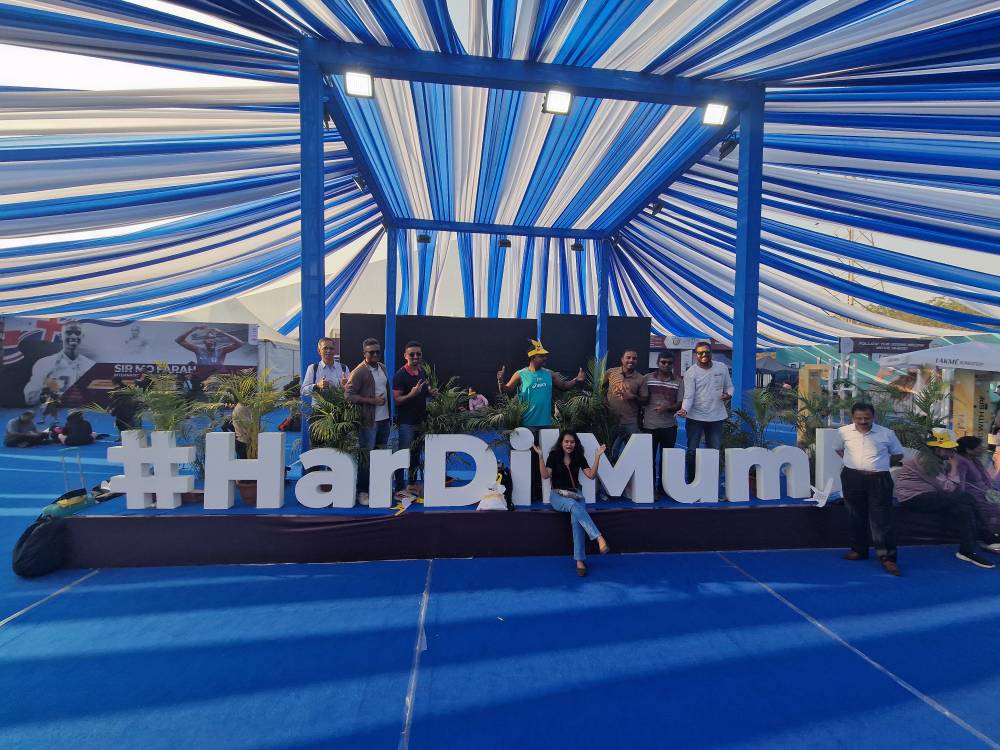
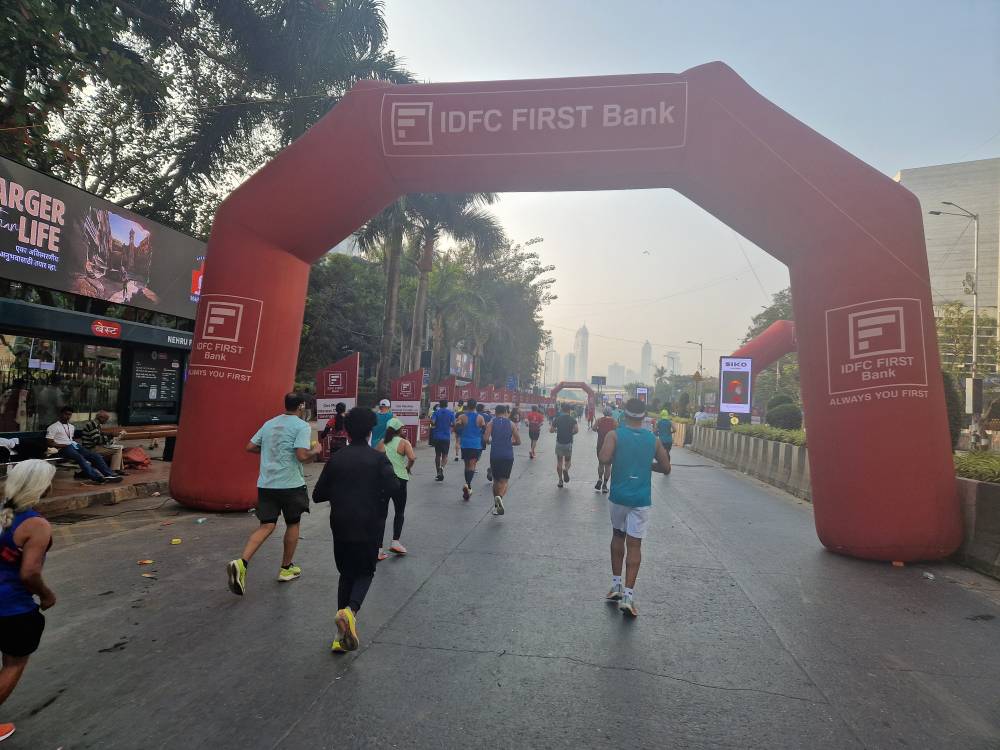
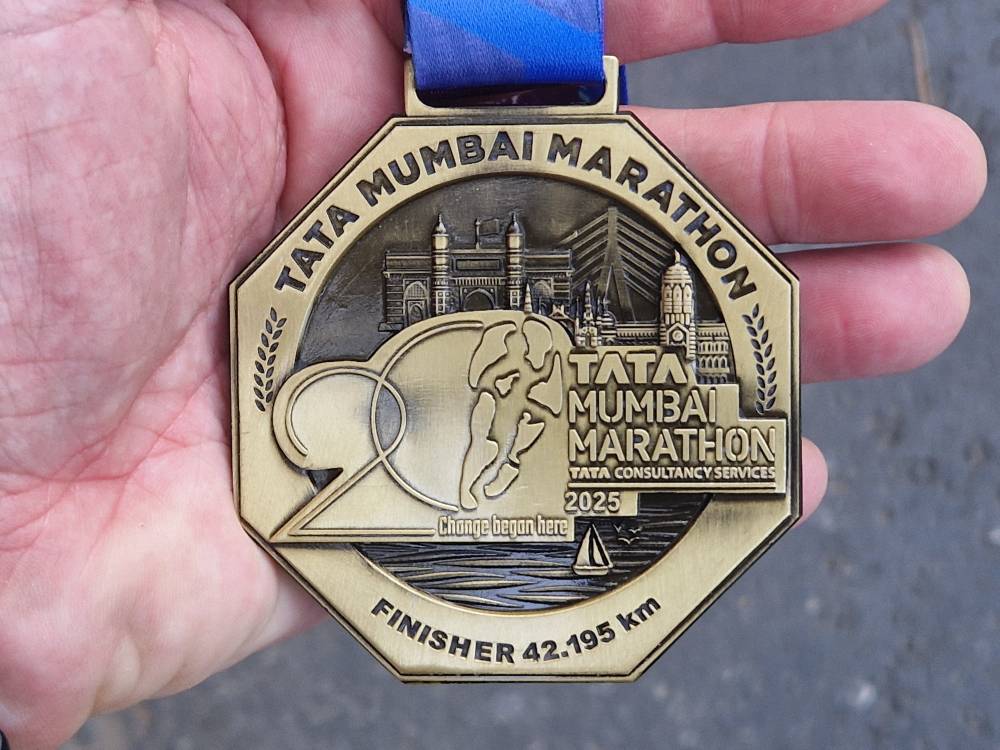
Indian city runs aren’t all that popular among Europeans; in Asia, Tokyo is probably the best-known as a World Major Event. Mumbai, however, is the largest marathon in Asia – or rather, the largest mass-participation sporting event in the region – with around 70,000 participants, of whom some 10,000 are on the marathon course, and is classified as ‘Gold’ by World Athletics. The package, costing around 60 euros, includes everything you’d expect from a top marathon, including a T-shirt and a medal with an intricately designed motif typical of India. Shoe sponsor Asics is offering a special edition of the Gel Kayano – after all, it is the event’s 20th anniversary. Main sponsor TCS is promoting the whole range of marathons it sponsors – a truly impressive commitment to the sport (I’ve already got ‘Tata’ on a running shirt from the Amsterdam marathon). Otherwise, you’re given a small running rucksack and the usual product samples – specifically muesli, a few dietary supplements, a magnesium lotion and some rubber adhesive for repairing shoes – plus a towel at the finish line, which I’m happy to give to a little boy who asks for a souvenir. The registration and the accompanying exhibition are very well organised. The atmosphere is fantastic. Many of the people I speak to are running their first marathon, and some want a photo with me. There aren’t that many foreigners; I’ve noticed about 30, mainly Thais and Japanese people living in India, but I also met someone from Dubai flying over just for the event.
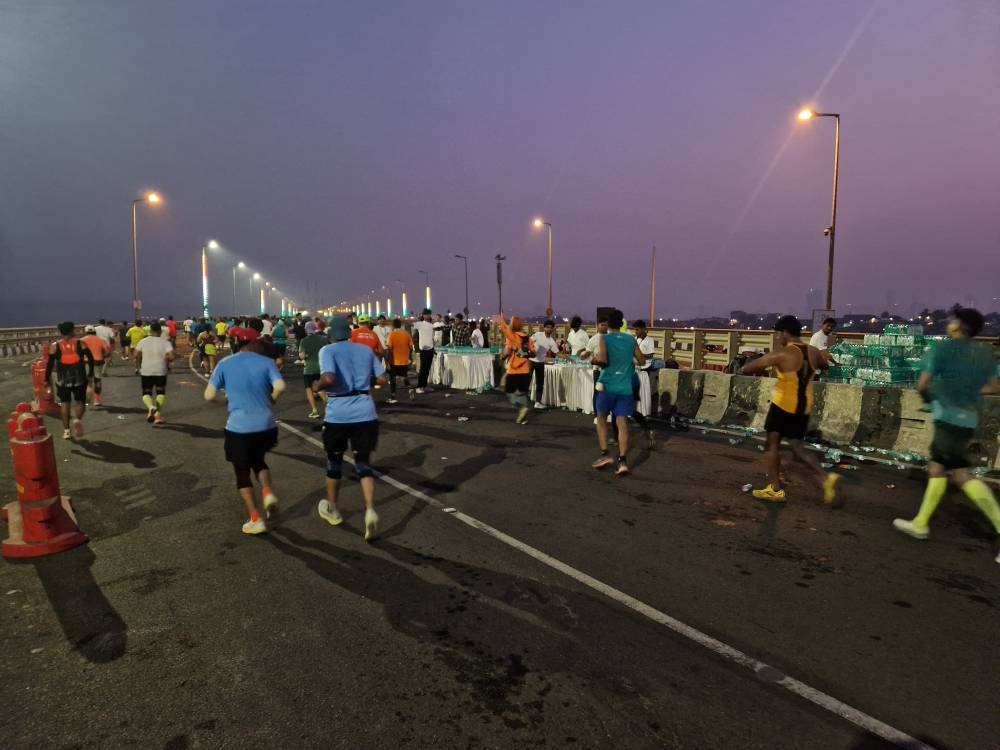
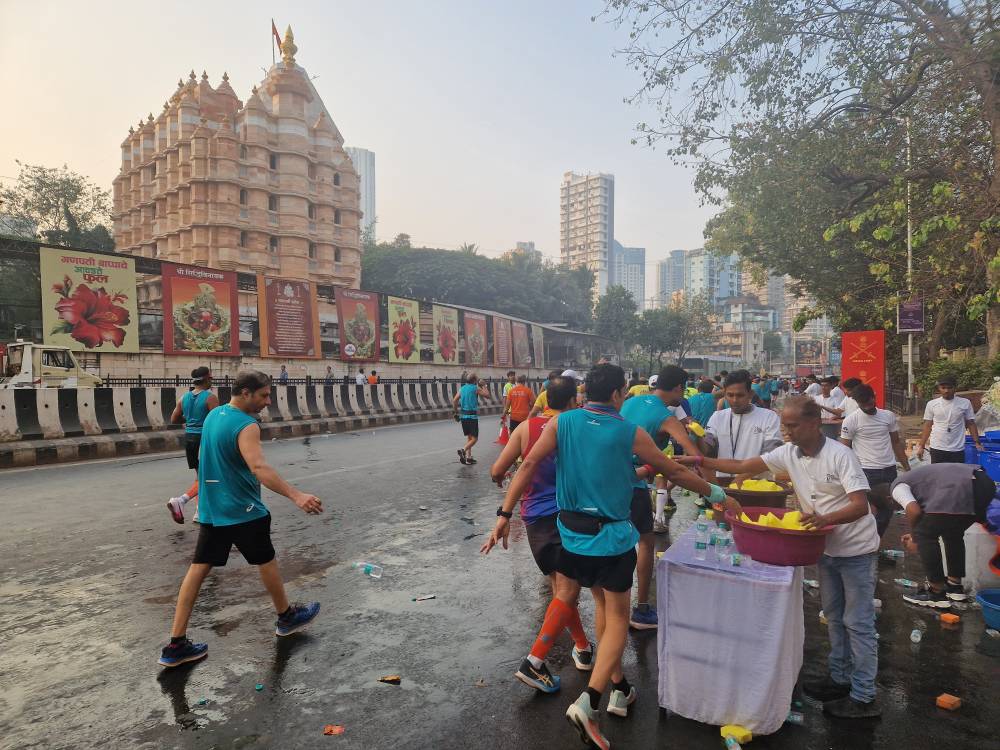
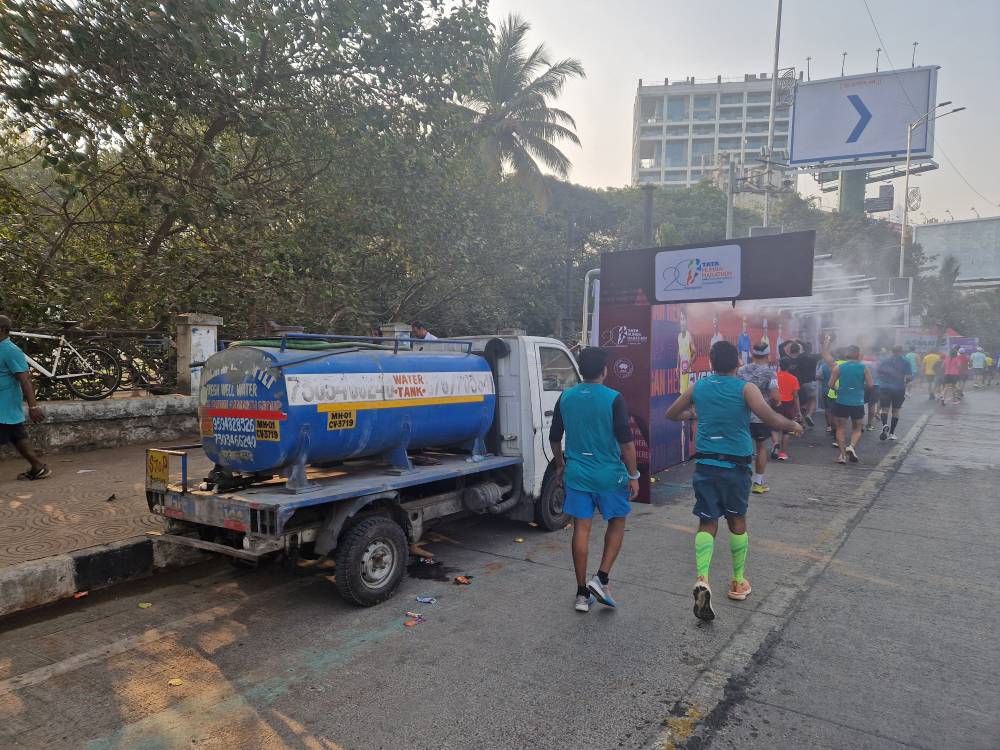
The refreshments along the route look set to be exceptionally good; there are 17 stations in total – two more than in Berlin. As for refreshments, however, apart from water and energy drinks, only oranges and nuts are listed, so I pop a few energy gels in my pocket just in case. It feels as though there’s actually someone standing every few metres along the route with water or an electrolyte drink. Fruit only appears towards the end; after the first few made me feel a bit queasy,I decided to give them a miss.
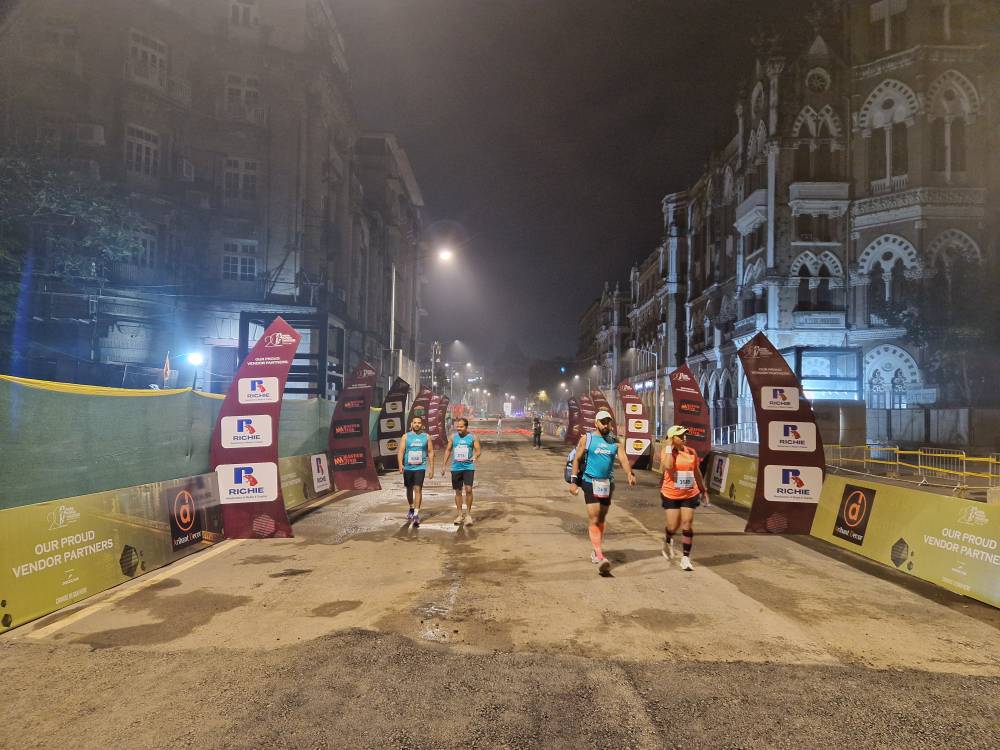
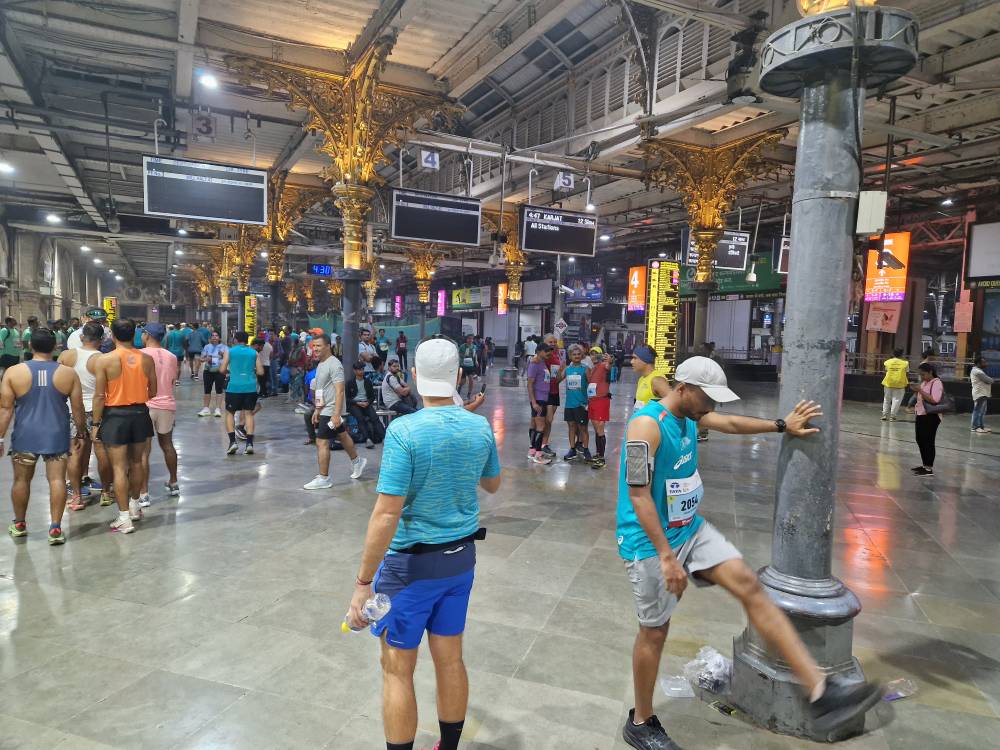
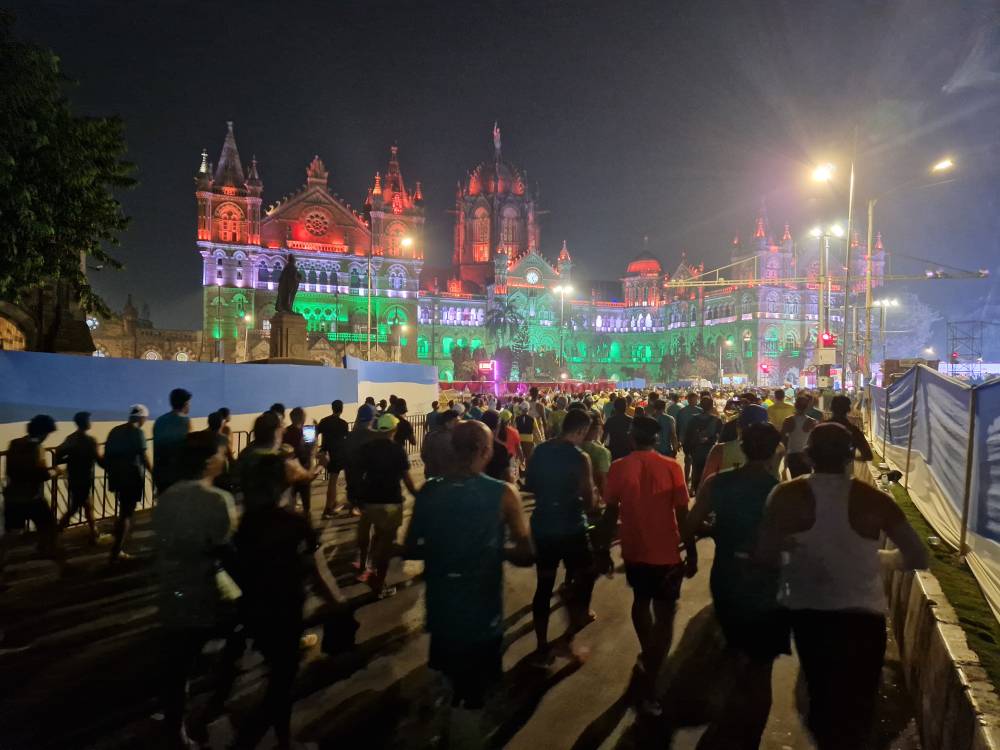
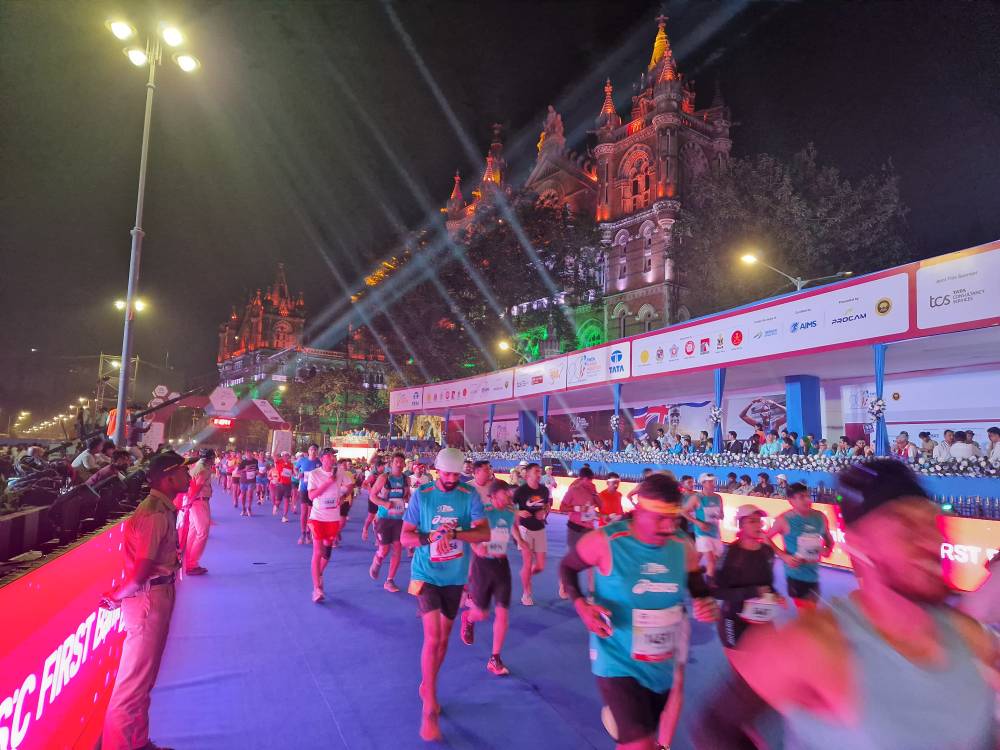
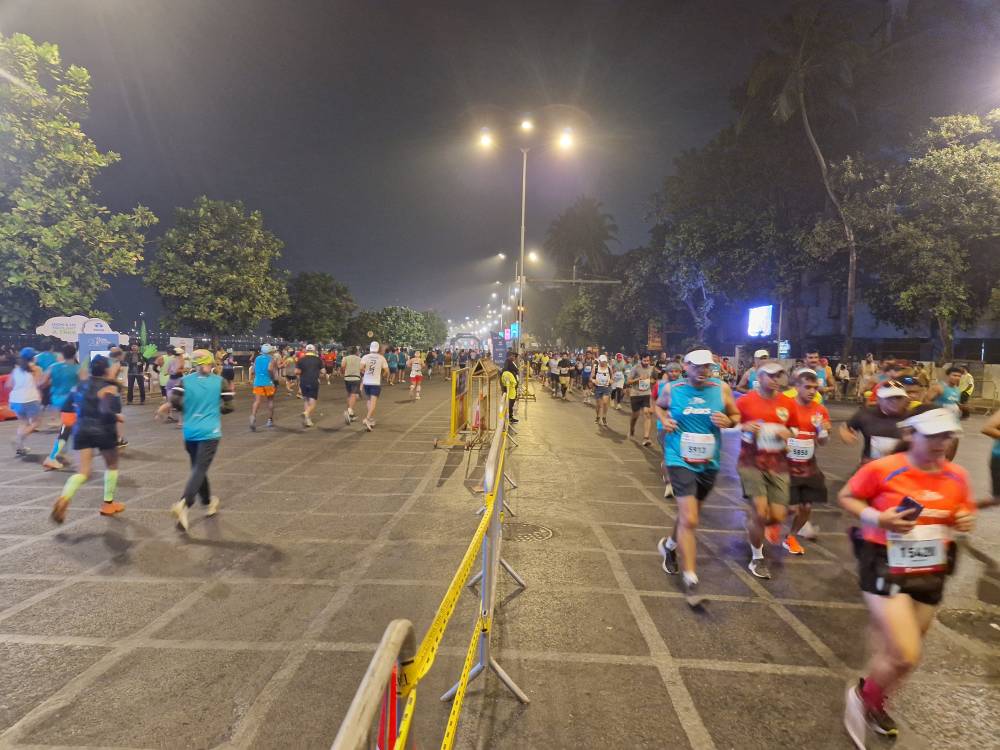
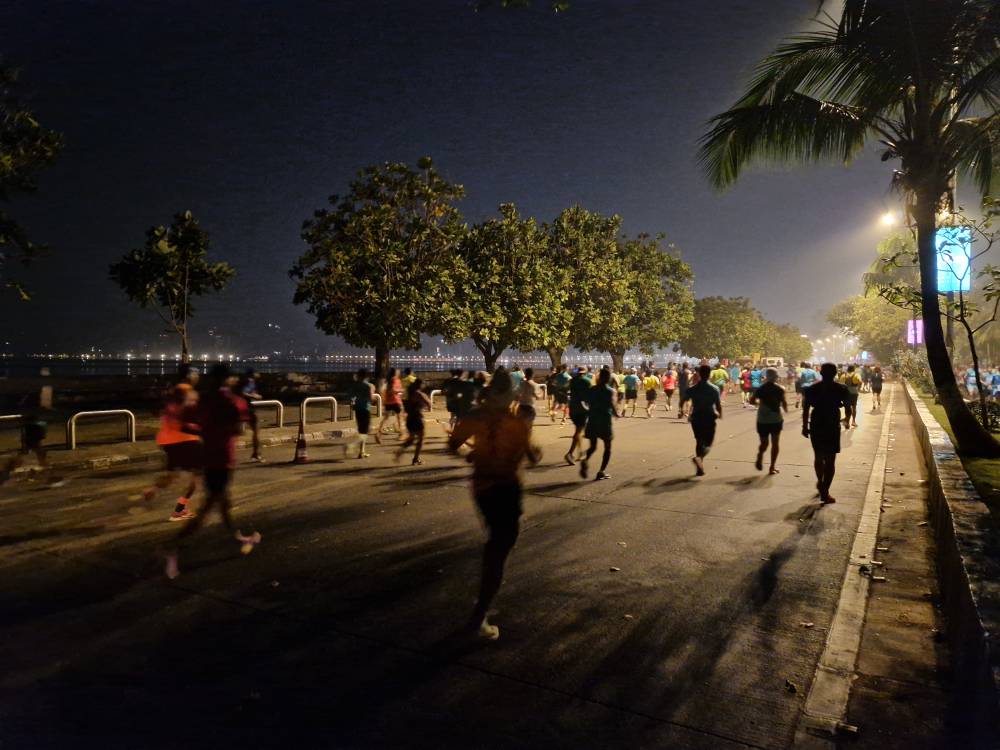
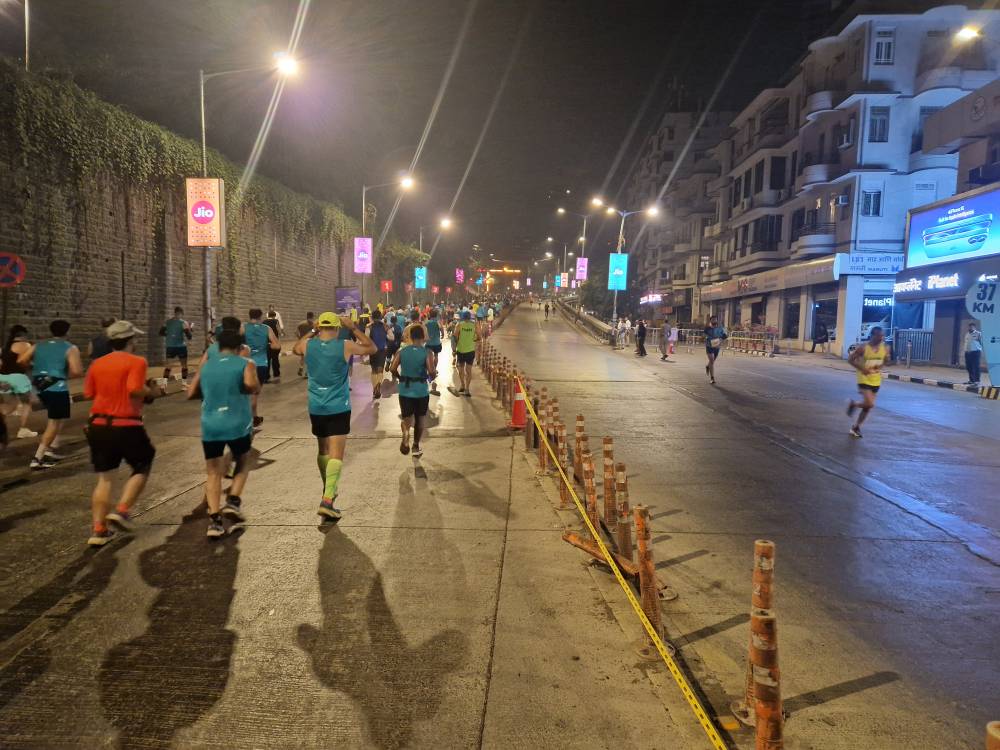
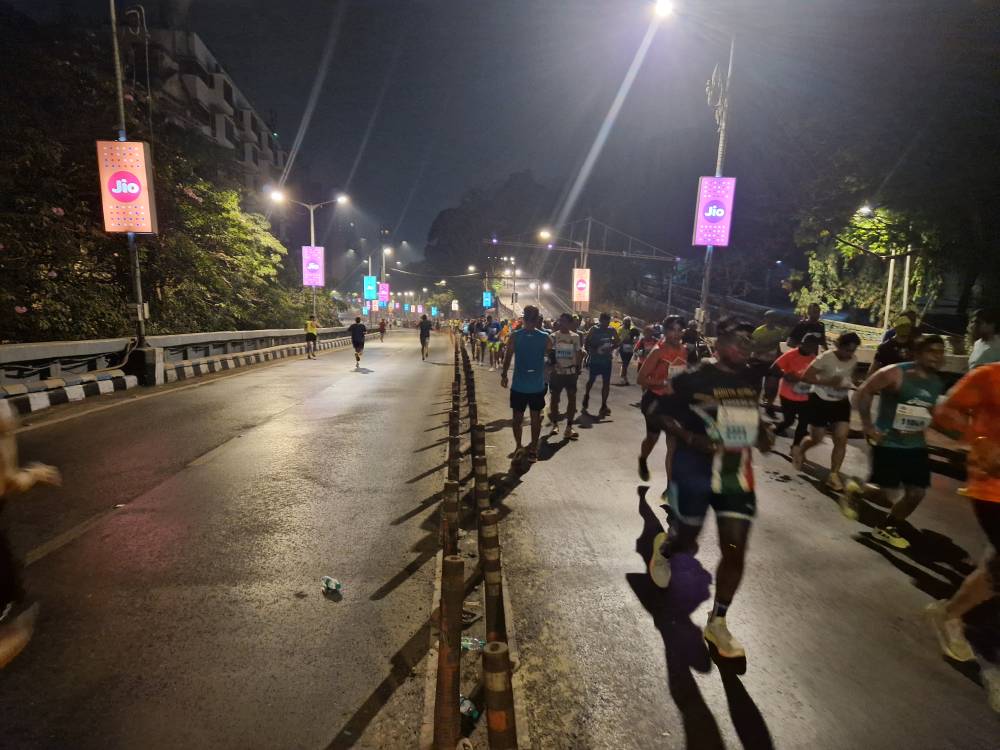
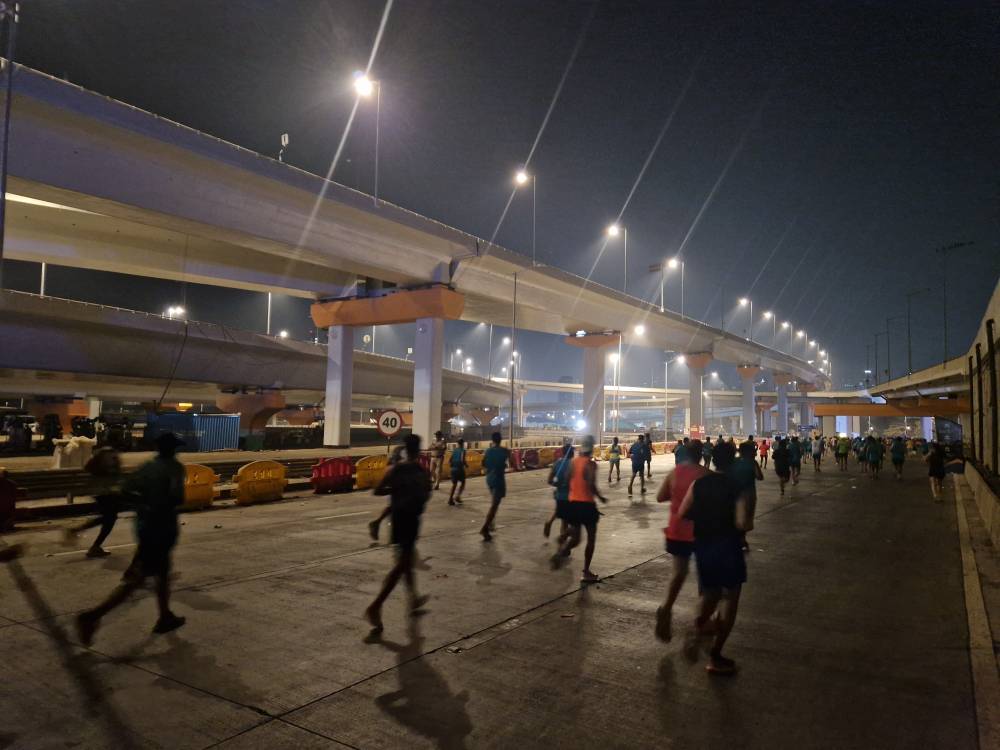
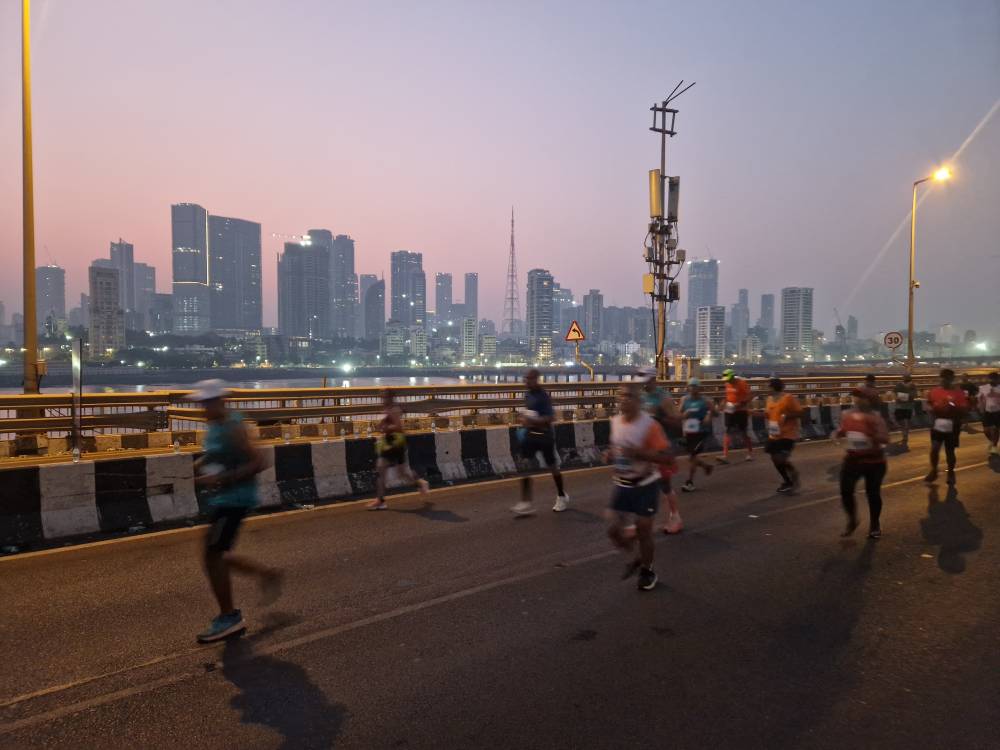
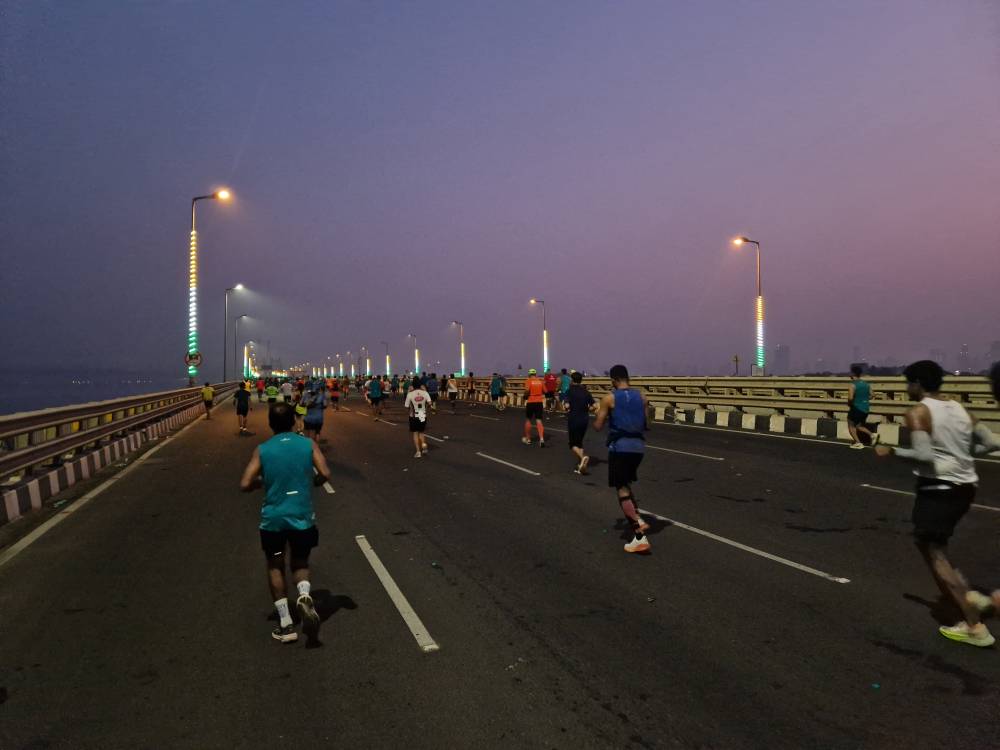
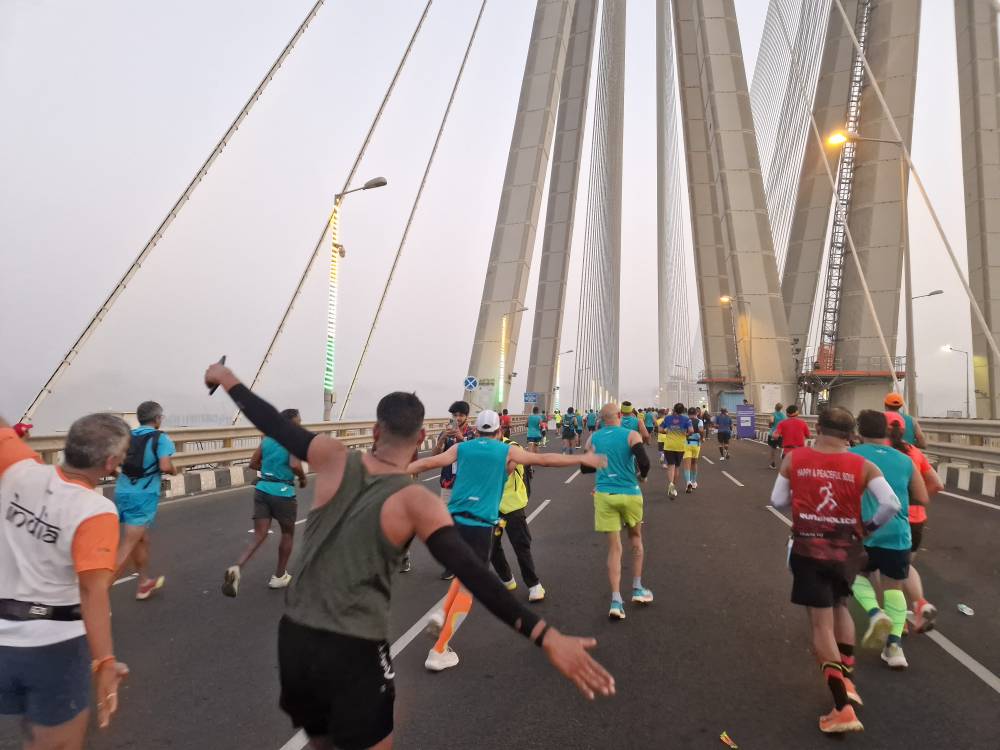
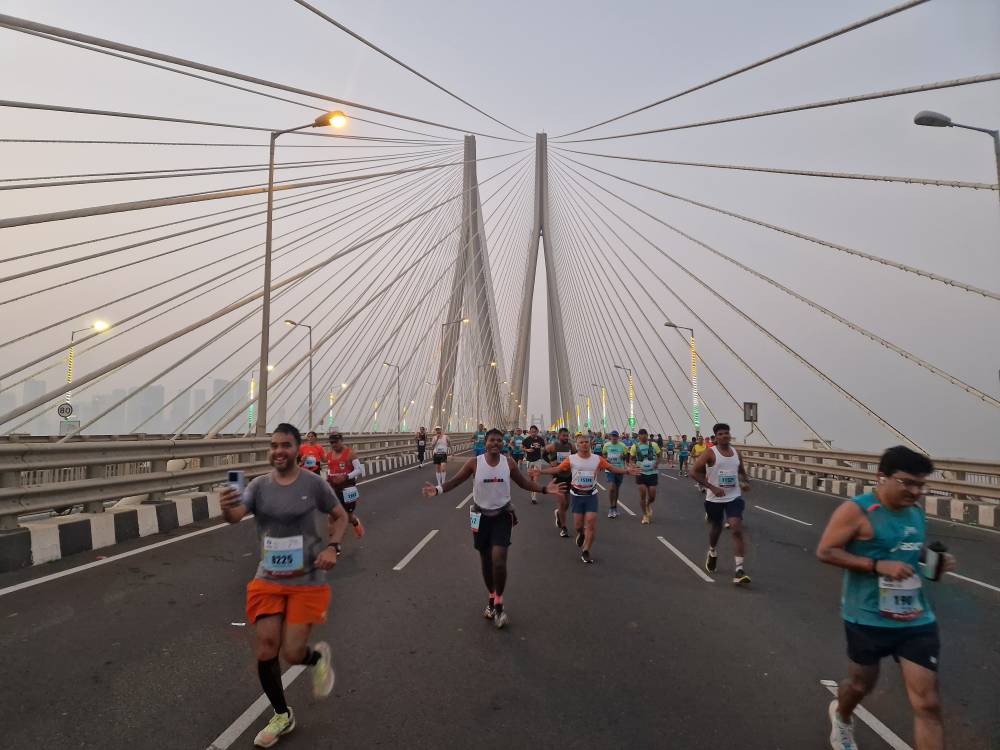
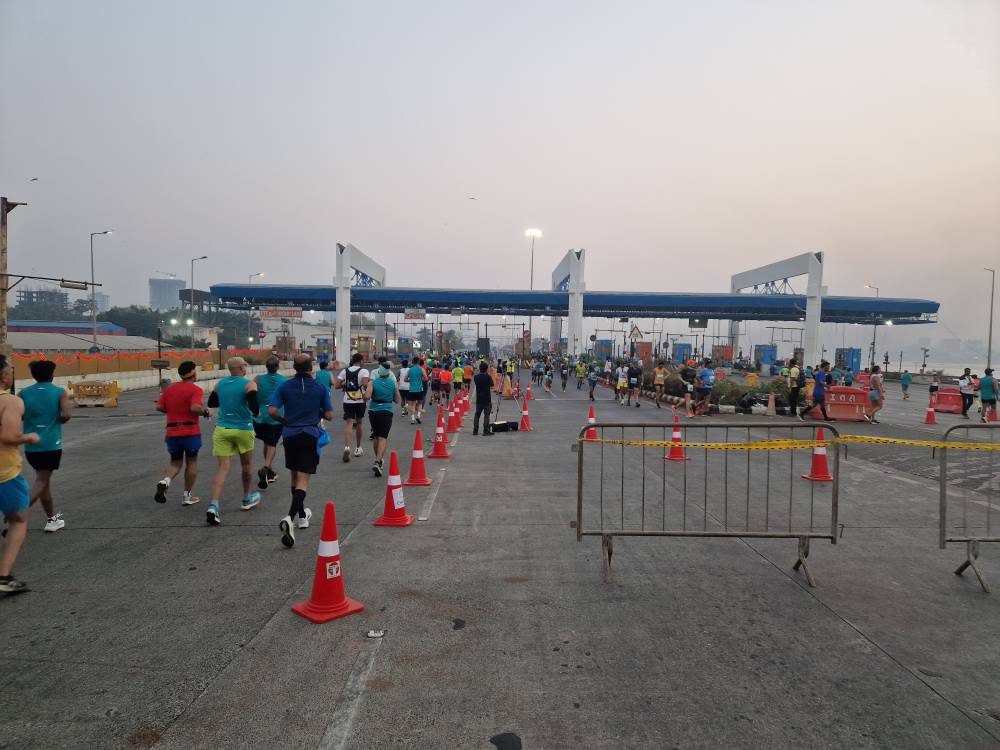
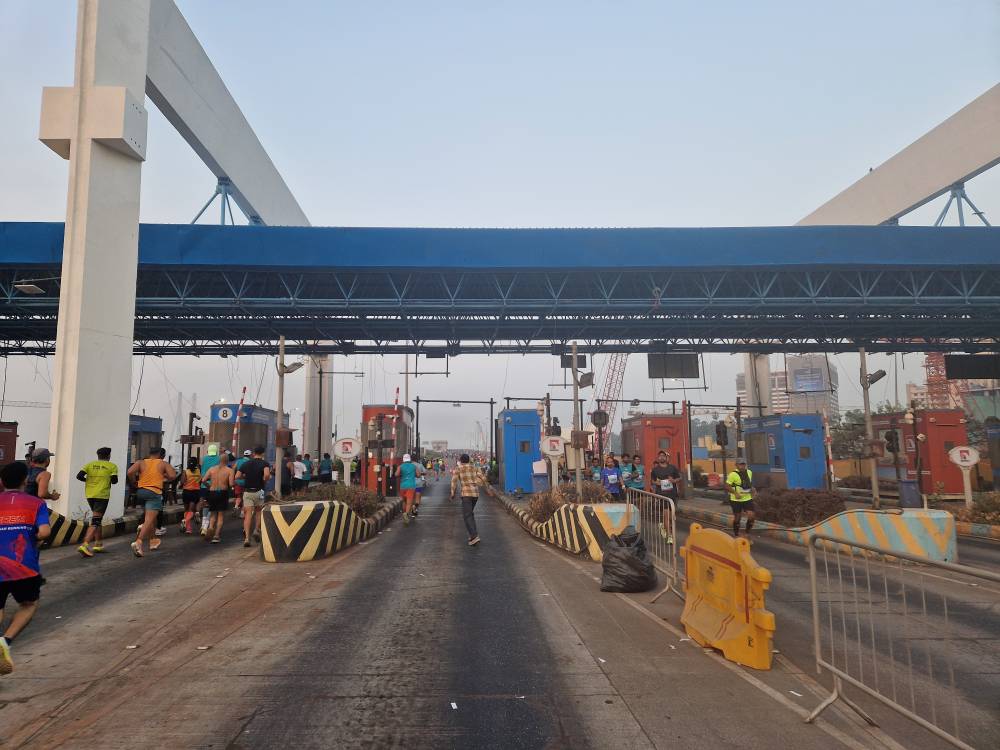
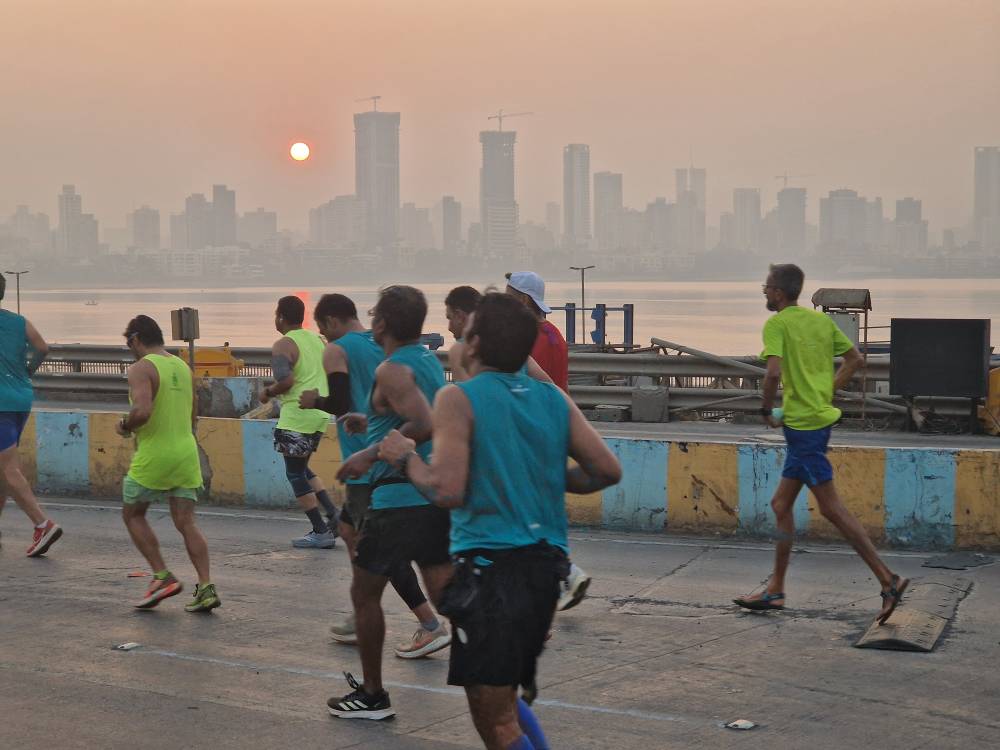
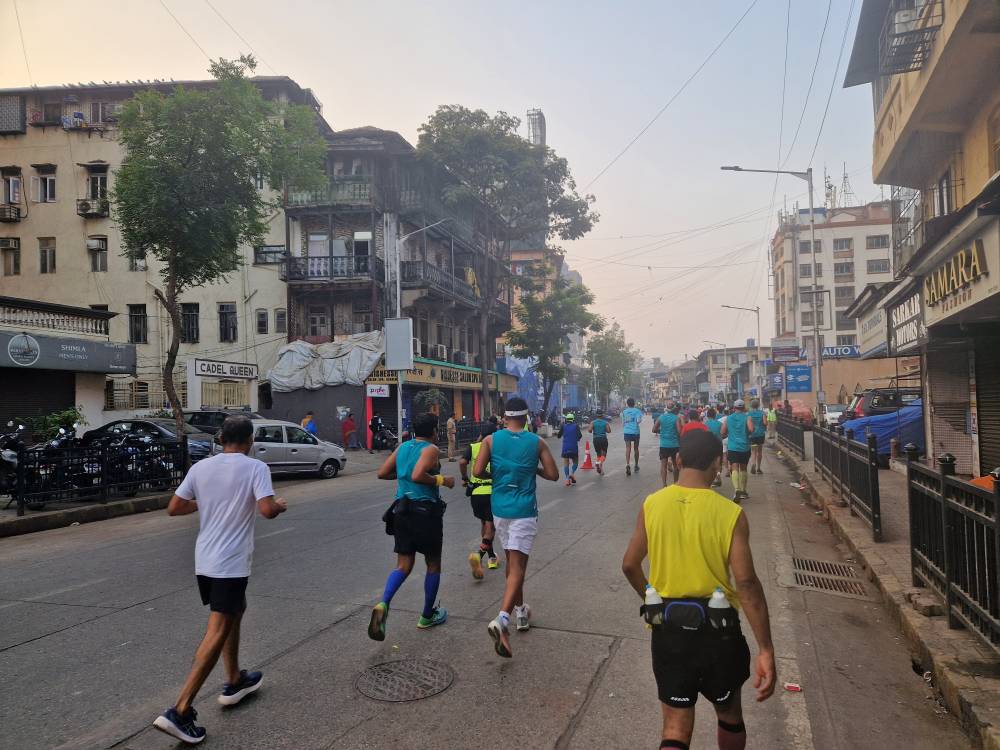
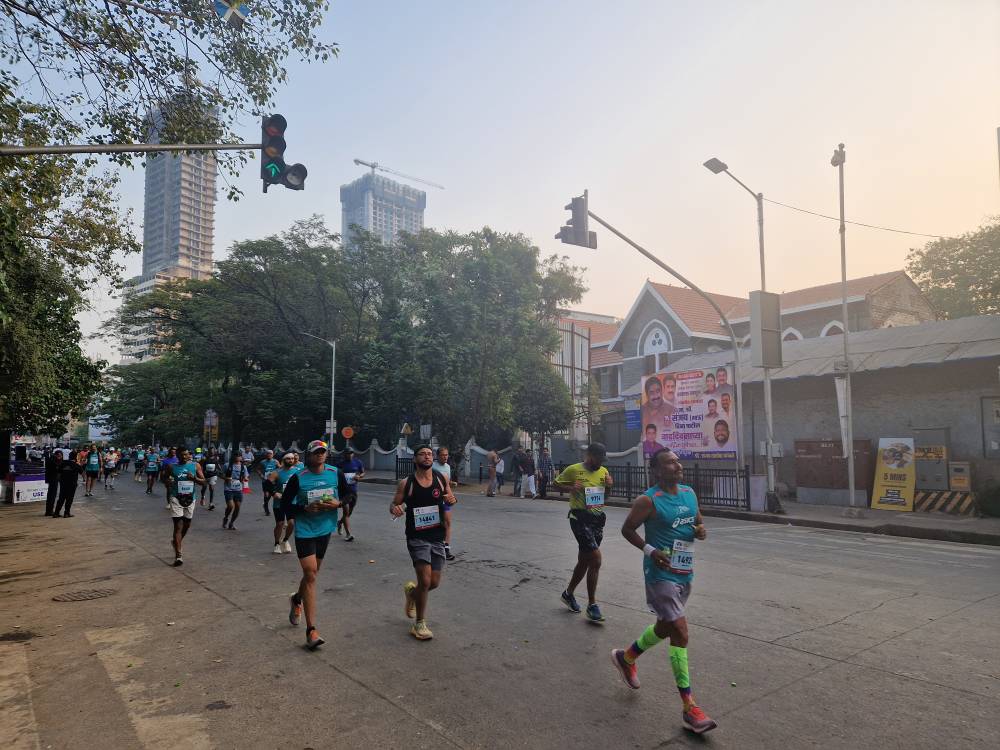
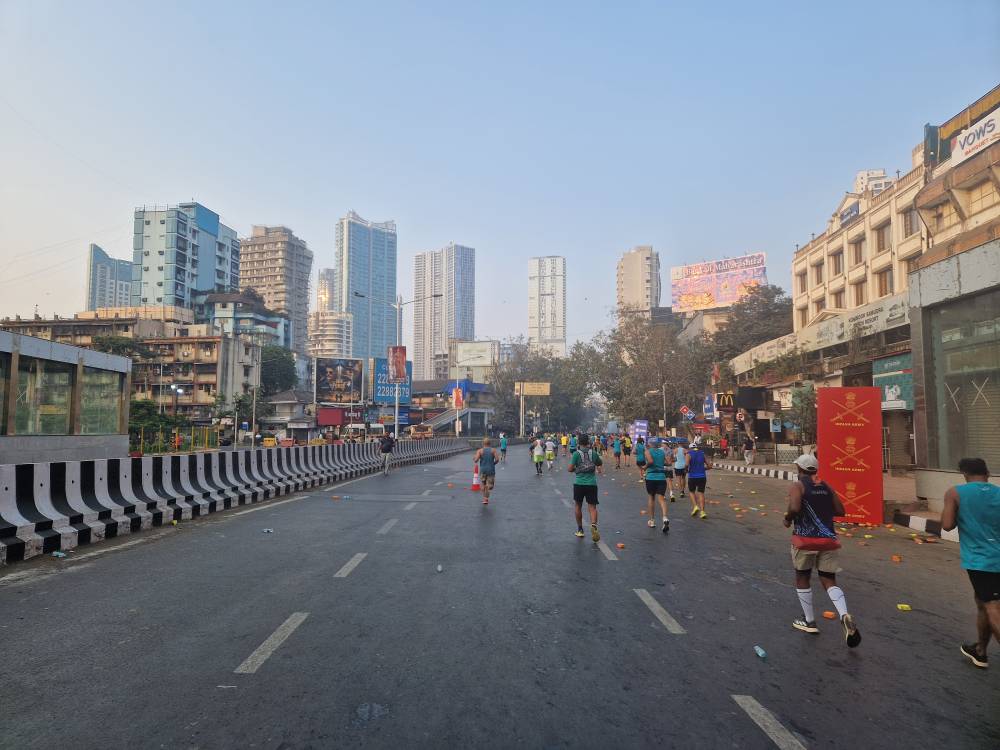
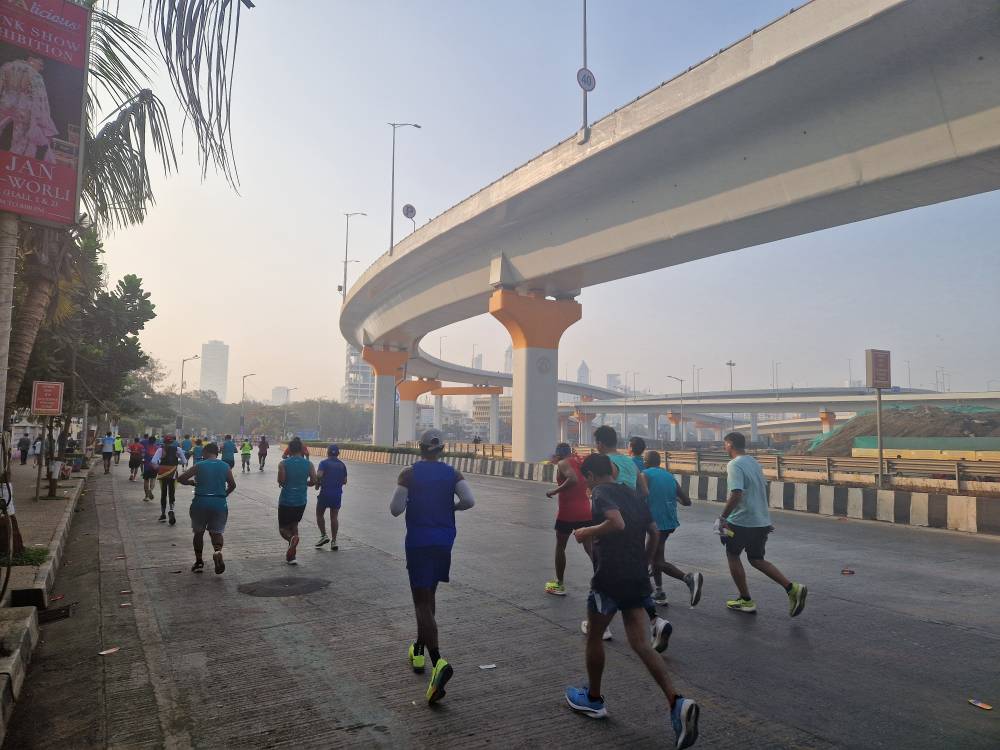
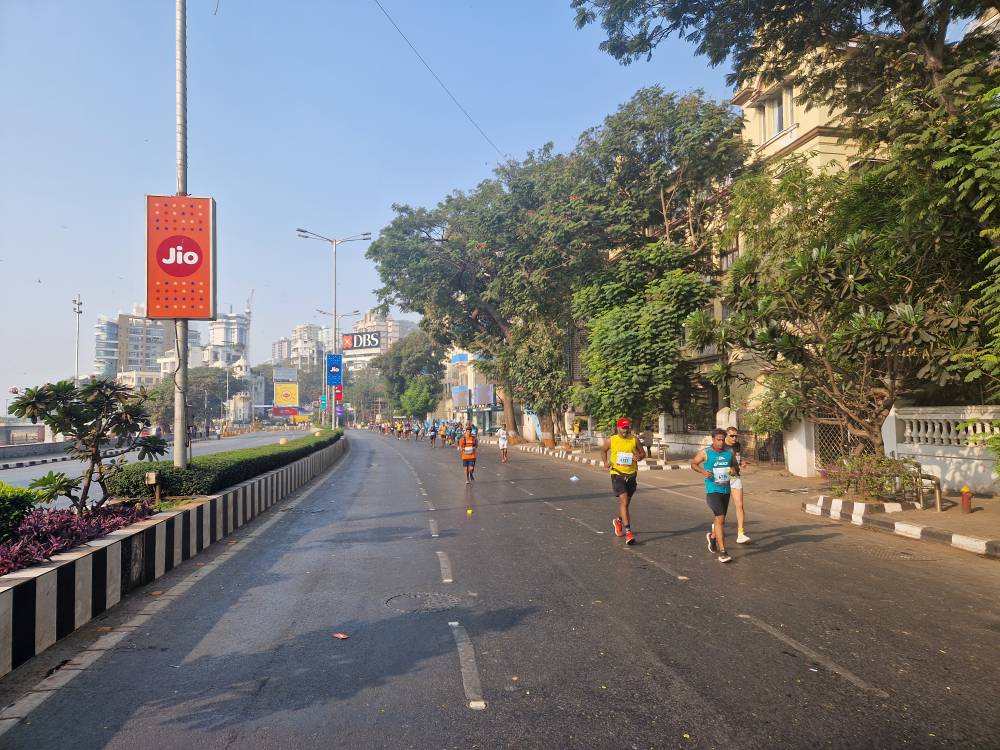
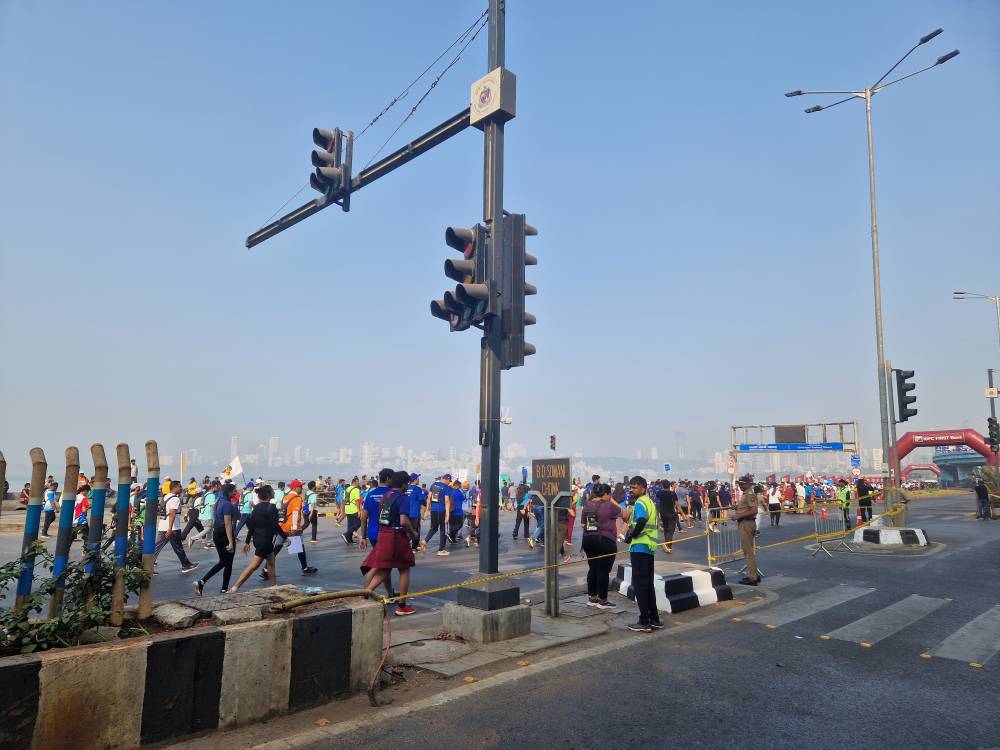
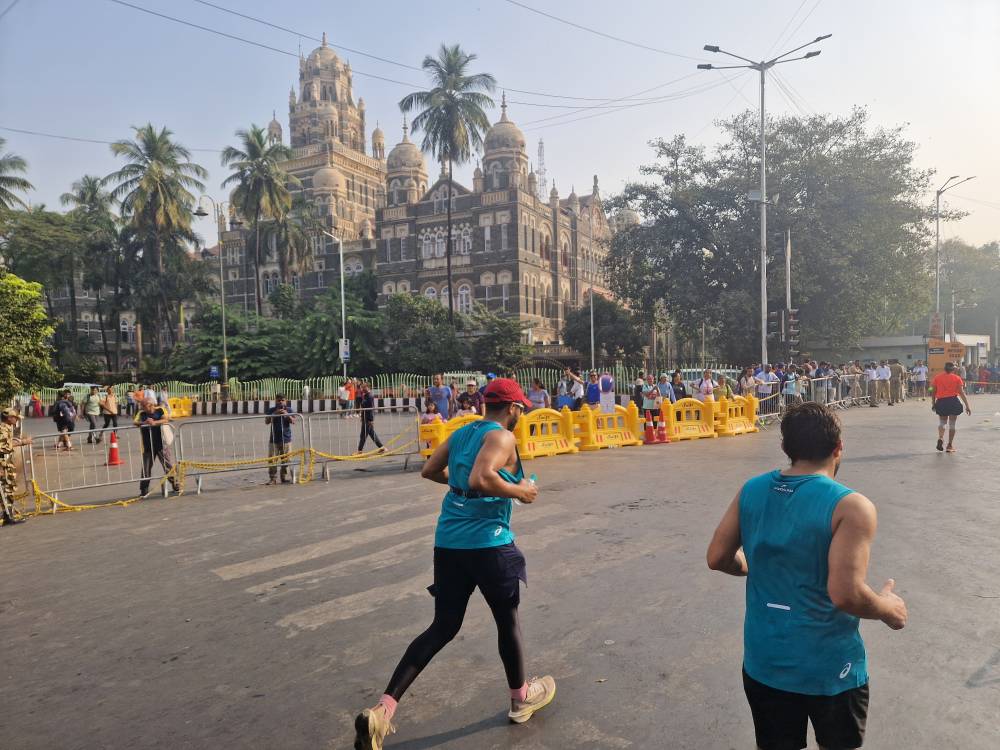
The route runs from the railway station to the western coast and then continues northwards; on the return leg, it runs parallel to it on the opposite carriageway. It’s quite exciting to experience the main artery into the city – which you’d otherwise only know as a traffic-jammed stretch whilst sitting in a taxi – completely closed to traffic. Between kilometres 15 and 20, you run across the bridge built out into the bay, known as the Rajiv Gandhi Sea Link, and then back along the other side of the bay, so that both the bridge and the loop are real highlights. The half-marathon runners start halfway along the route and effectively run towards you, whilst the elite runners have their own route – often on the opposite lane or at least separated off, so that they aren’t held up, but also don’t have to get up quite so early. As far as I’m concerned, there aren’t really any other architectural or tourist highlights apart from the beautifully illuminated station building at the start.
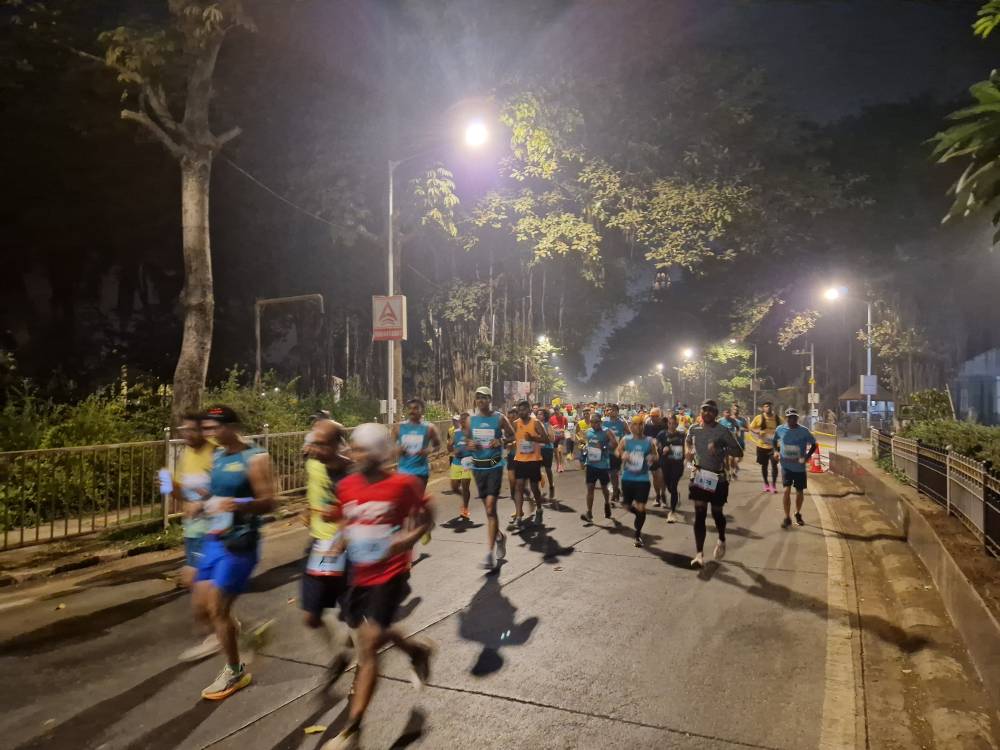
As it all starts at 5 am, in four waves separated by high wooden walls and lengths of fabric, and the sun doesn’t rise until 7.15 am, it’s dark for half the route anyway. The first two hours, partly because of the temperature, are actually the more pleasant ones. Then there’s the sunrise on the bridge and a few less interesting neighbourhoods. There are also some climbs, notably two smaller ones at kilometres 11 and 35, so most people walk rather than run here, and on the last one you get a direct view of Mr Ambani’s most expensive residential building in the world.
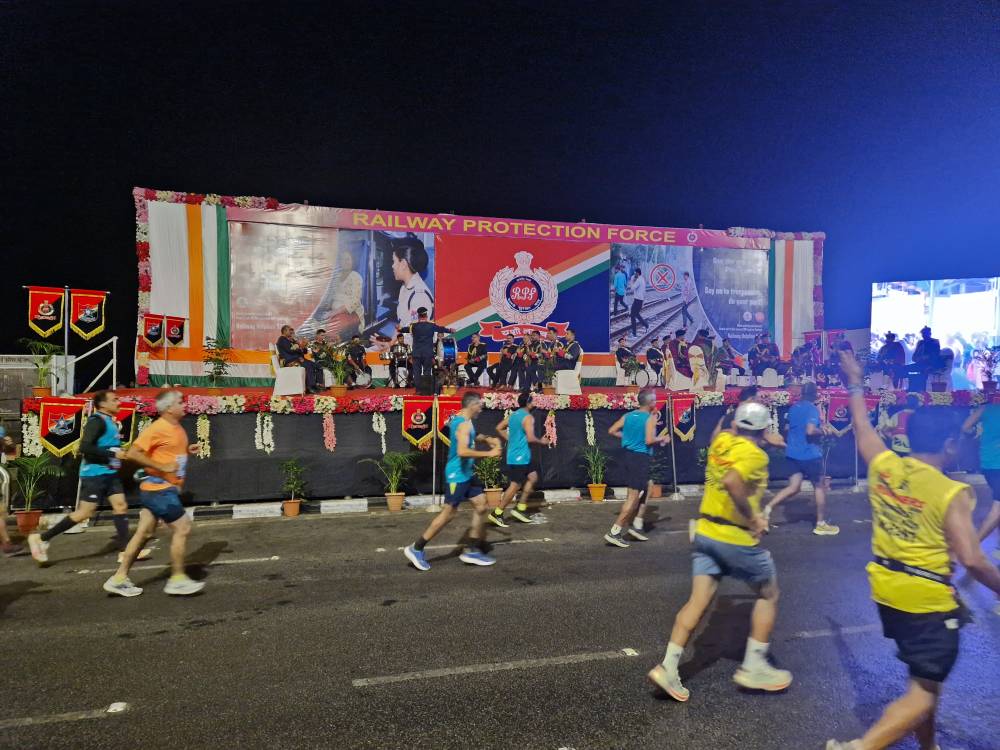
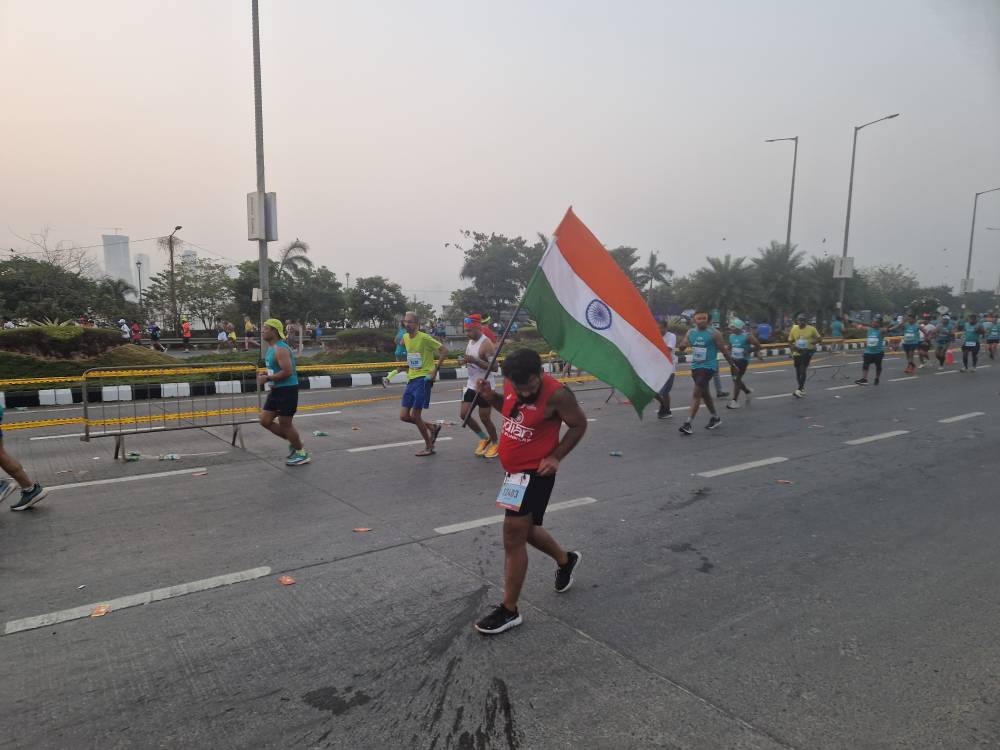
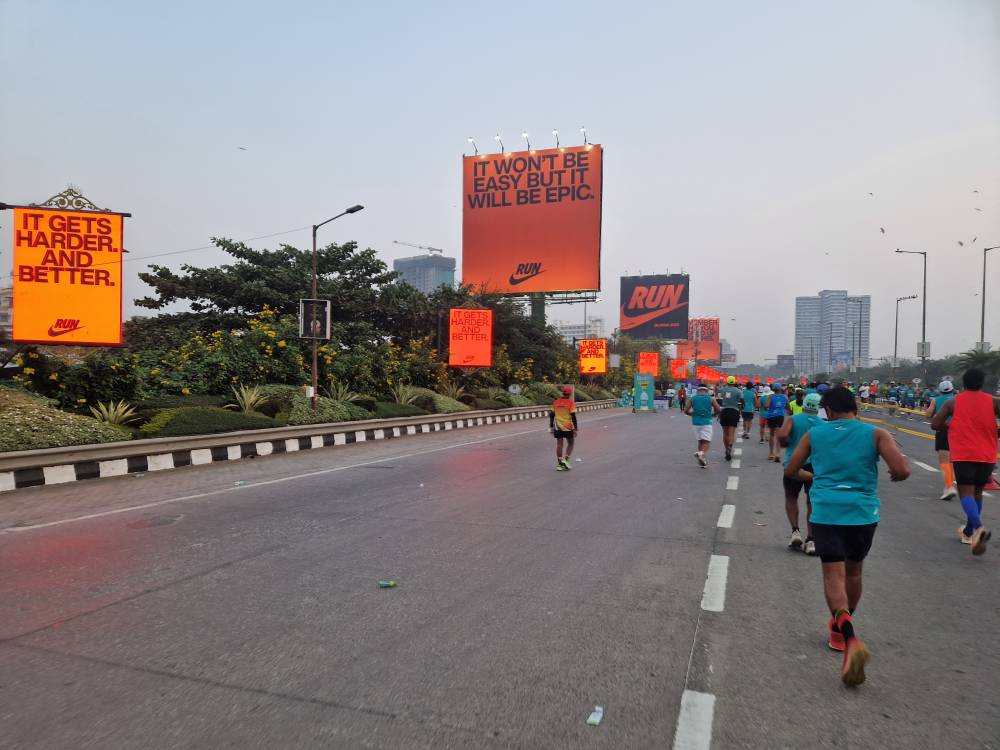
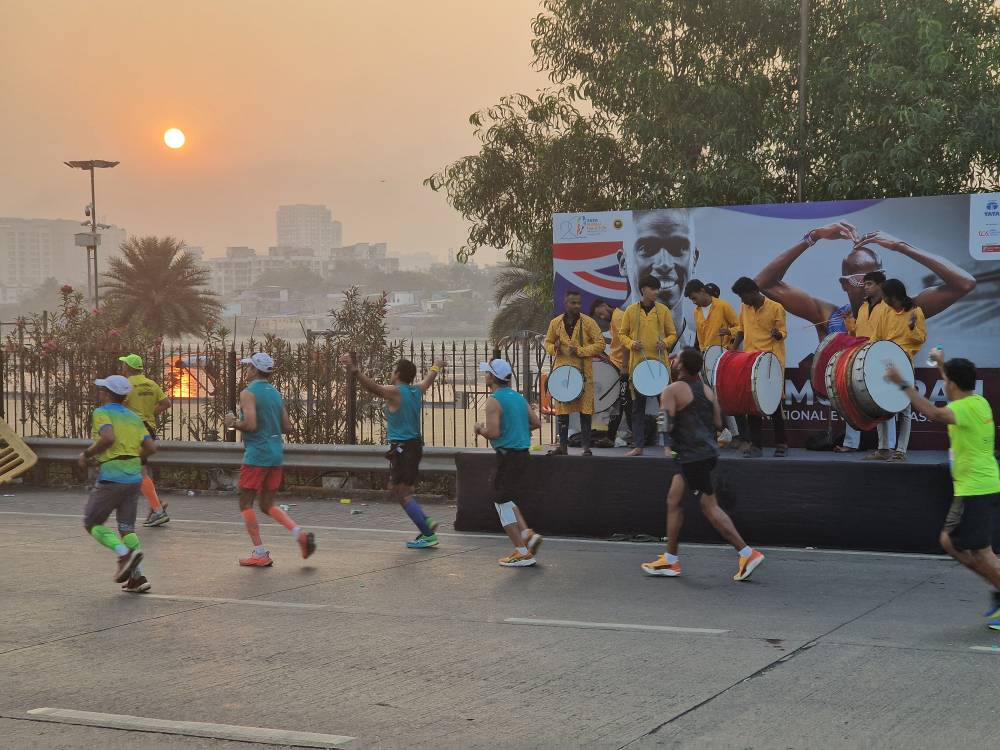
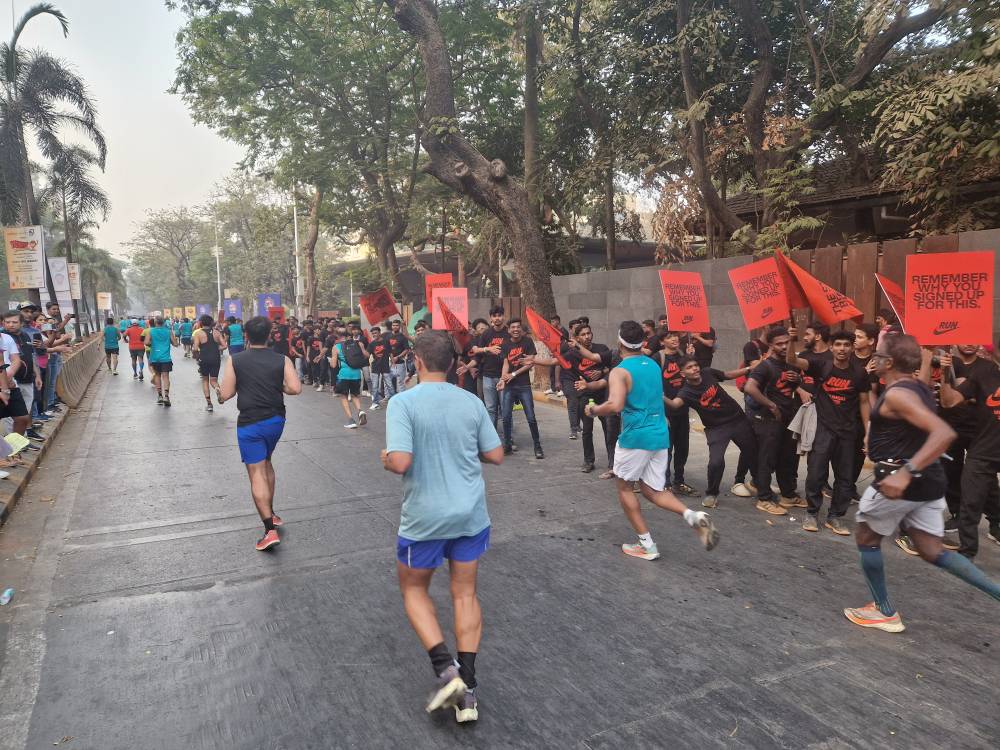
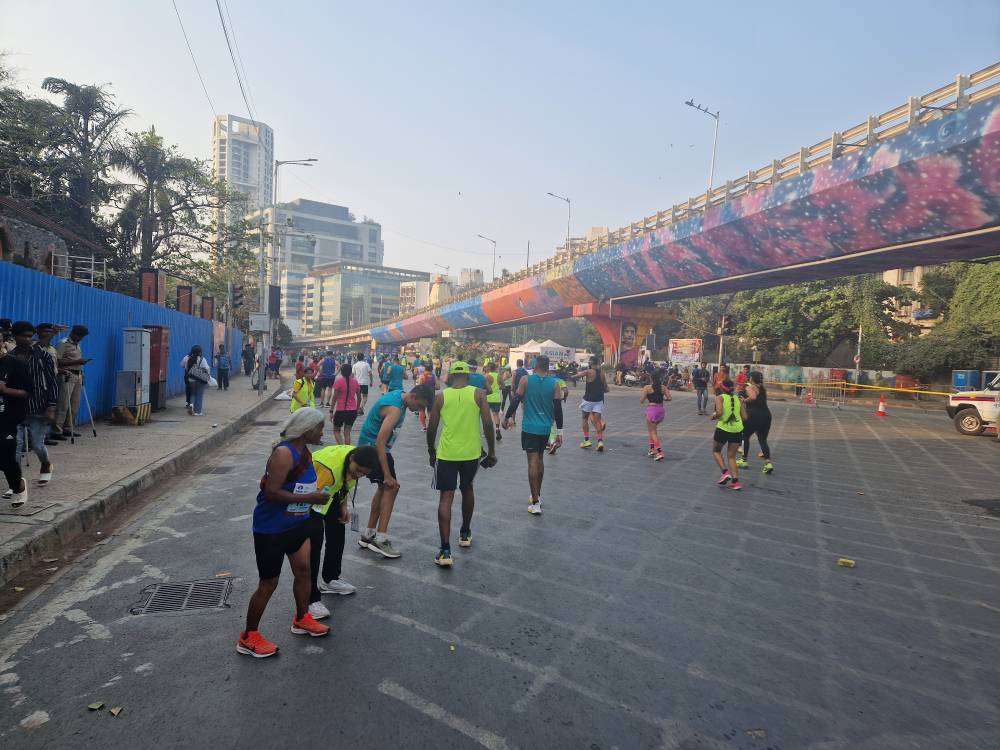
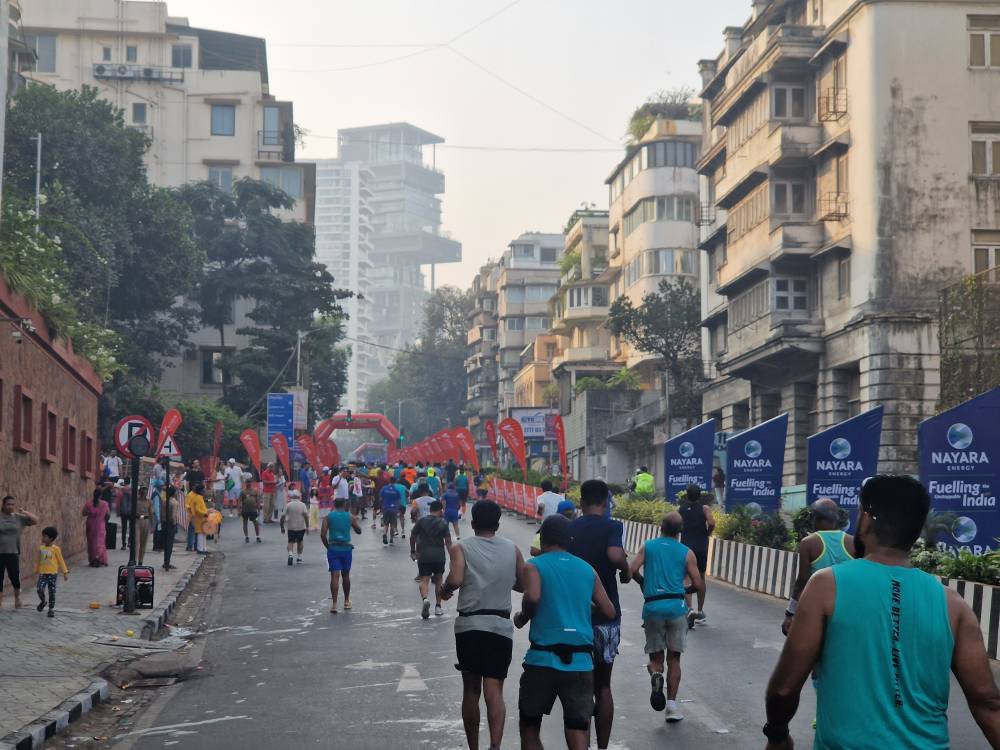
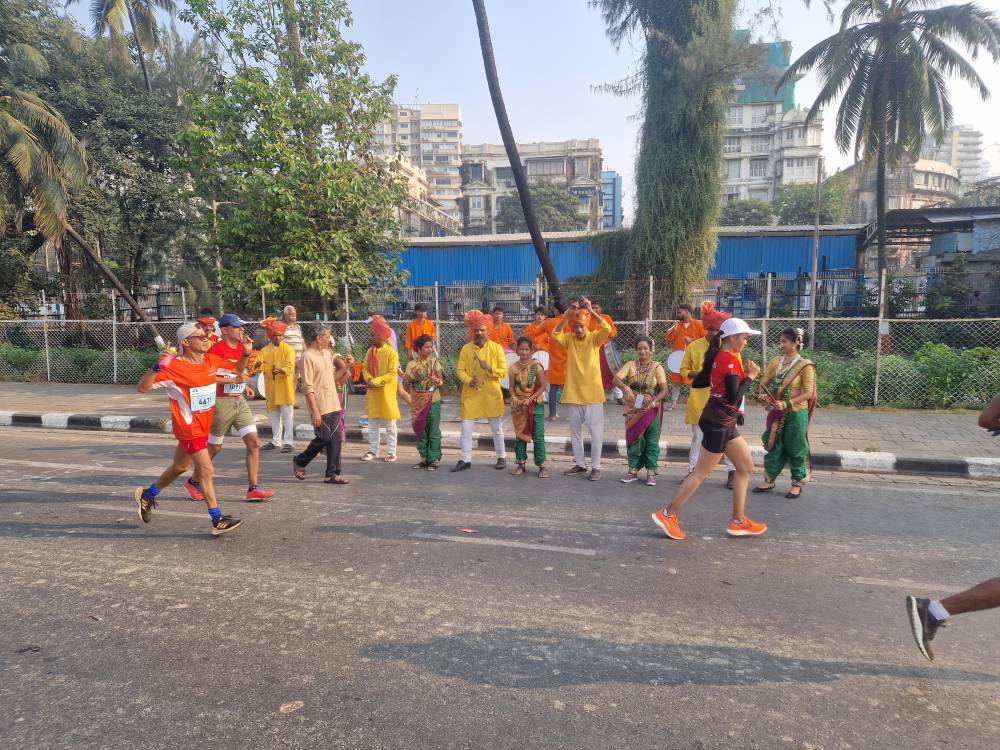
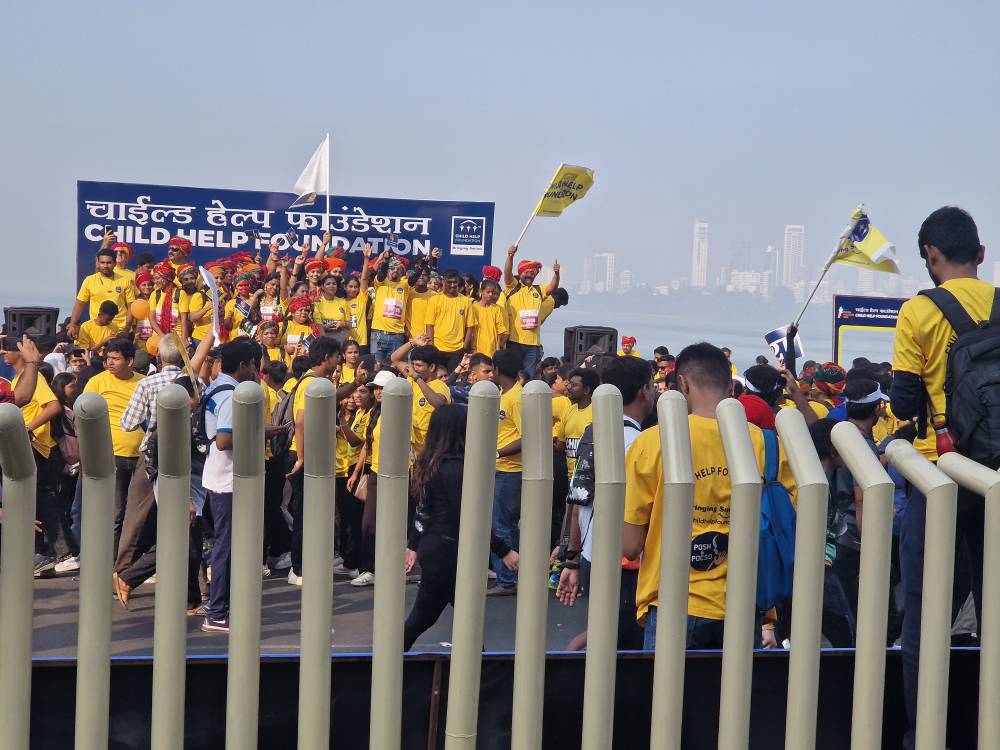
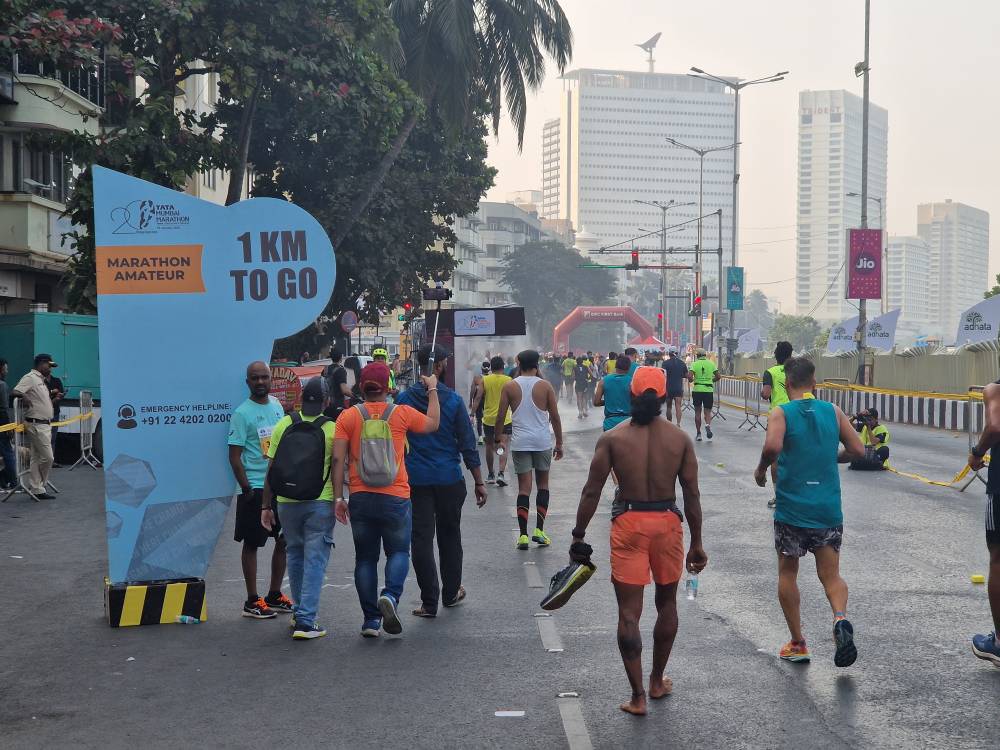
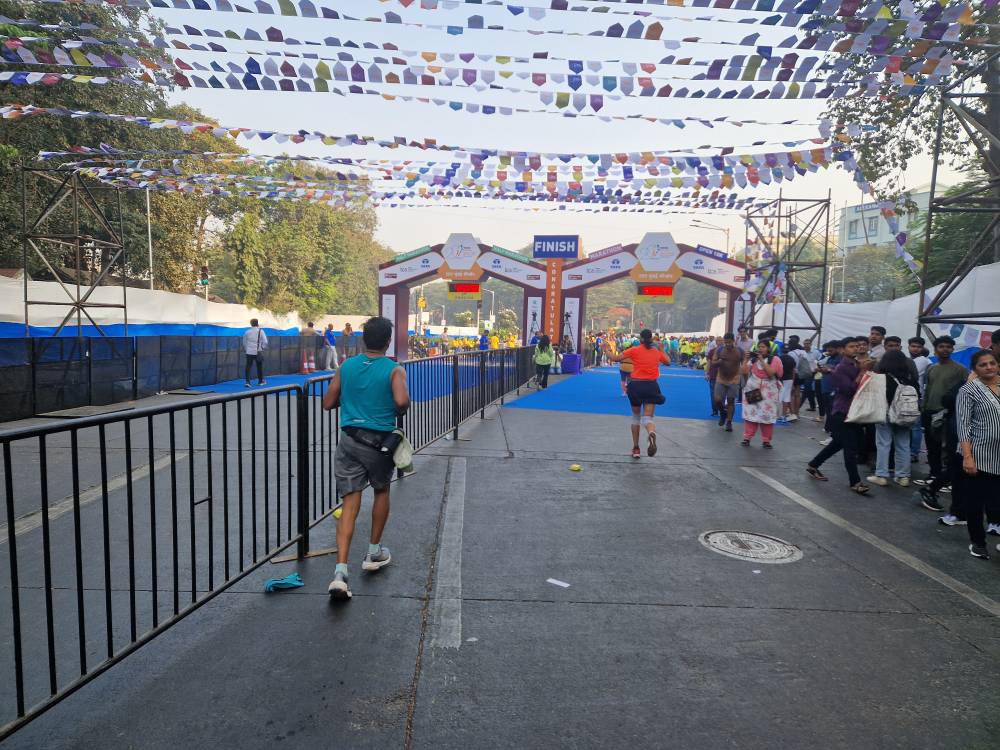
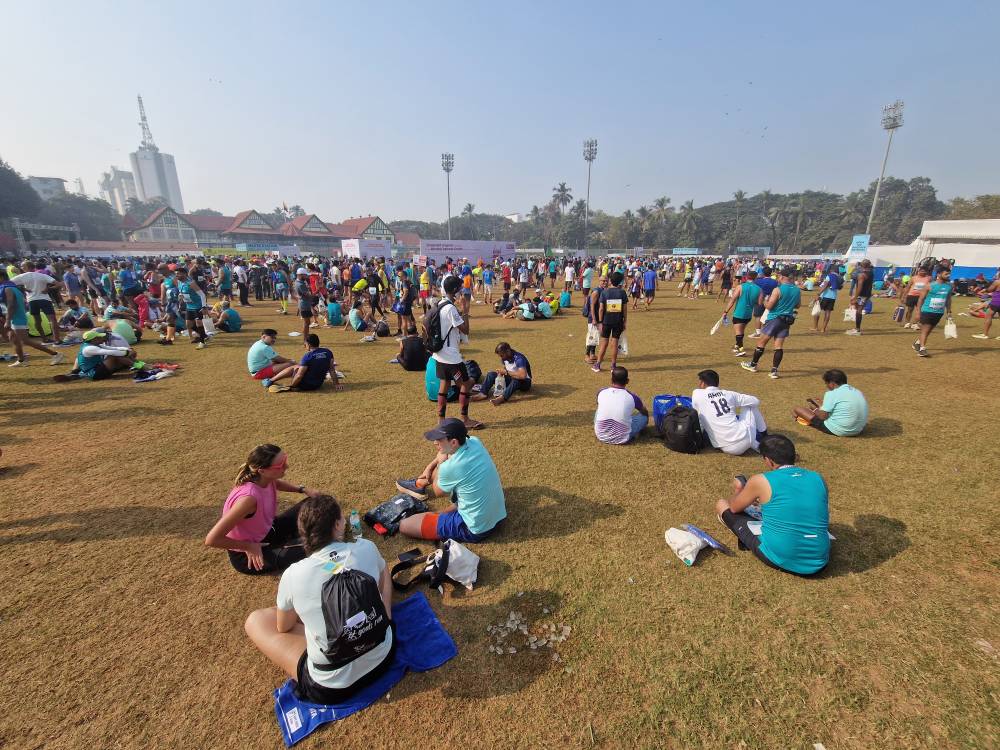
Otherwise, the route keeps you well entertained. There are numerous drumming groups (authentically Indian, not Brazilian like in Europe), solo performers and orchestras (e.g. the somewhat very motivated brass band of the railway police), as well as an incredible number of members of the public lining the streets with signs. The Indians also cheer each other on more enthusiastically than I am used to, sometimes with collective battle cries that strike me as rather military in nature – which fits in with the fact that some runners are carrying Indian flags. You would not see that in Germany. There are plenty of pacers, ranging from 3:30 to 5:30 and then 5:55 as well, so there really is something for almost everyone, though they tend to be at the slower end of the scale. The cut-off time is 8 hours. There are photographers on every corner, and runners who run towards them with their arms raised, thumbs up, arms outstretched or in any other photogenic pose. People are simply having a great time. There are also over 250 charitable organisations taking part, some of which have stages along the route. However, these aren’t manned early in the morning; they only come to life during the ‘Walk’, which you can see on the other side of the road during the final few kilometres. At first I thought it was a protest march: very densely packed, with people holding placards and banners. In essence, that’s what it was, but it was organised by registered organisations covering a fairly broad spectrum of issues, ranging from environmental protection and domestic violence to spiritual topics. During the walk, the participants then chant the slogans of these organisations, which further reinforced the impression of a demonstration, apart from the race numbers. Another striking feature was Nike, which hadn’t sponsored the race but had rented large billboards at strategic locations and deployed hundreds of young people in red Nike t-shirts holding up signs. A very professional piece of guerrilla marketing. Right at the end, there was the usual party on a huge sunbathing lawn. By then, however, it had got a bit too warm for me, so I decided to head back to the hotel for a shower and a nap afterwards.
Would I recommend the run? If you’re in Mumbai or the surrounding area anyway, then definitely. But it’s only worth travelling there specifically for this if you’re absolutely determined to have run in India at least once. The race isn’t really that spectacular, and unlike in places such as Seville, Paris, London or New York, you don’t actually get to see many of the tourist attractions, which Mumbai does have. You might be better off visiting the city as a tourist and heading into the mountains as a runner. India, particularly at the foot of the Himalayas, has some truly spectacular sights to offer and is really fantastic for trail running. Plus up in the mountains outside the cities the air is absolutely brilliant.